
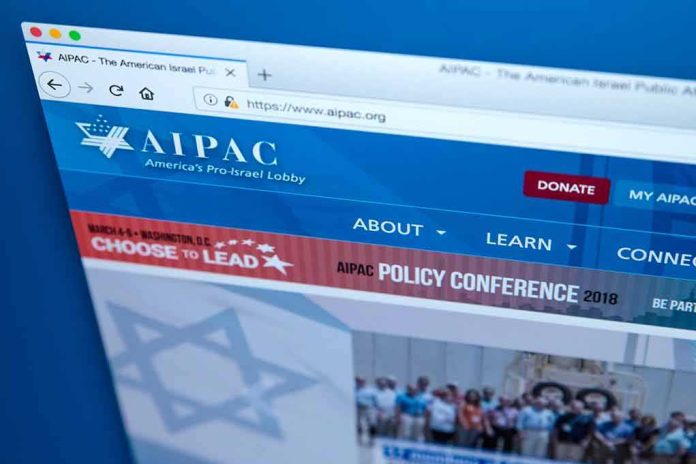
AIPAC will stop endorsing candidates and halt direct political action committee contributions after the 2026 midterms, while steering donors and keeping its super PAC active.
Story Snapshot
- Formal endorsements and direct PAC checks end after 2026.
- Strategy shifts to organized individual giving guided by AIPAC.
- United Democracy Project continues independent spending.
- Change reverses AIPAC’s 2021 cycle approach.
What AIPAC Is Ending, What It Is Keeping
AIPAC told members it will no longer issue endorsements, route money through its political action committee, or earmark funds for specific candidates. The change takes effect after the 2026 midterms, not before. The group will continue to engage in elections by organizing donors and pointing them to campaigns. The affiliated super political action committee, called United Democracy Project, will keep operating and can spend unlimited amounts on independent advocacy that does not coordinate with campaigns.
Reports say AIPAC’s new plan leans on “new tools” that expand individual giving. That means the group will recommend candidates to supporters, who will then give directly to those campaigns. Jewish News Syndicate reported that AIPAC told members they had given more than $90 million directly to candidates in the cycle, and that organized direct giving would continue. That figure comes from AIPAC’s statement, not a public filing, but the directional shift is clear and specific.
Why The Shift Matters In Plain Terms
Direct contributions and endorsements create an obvious link between a group and a candidate. Independent spending uses outside ads and messages without direct ties. AIPAC is moving from the first to the second and to guided donor activity. That channel choice matters for limits, disclosure timing, and optics. It reduces the headline “AIPAC-backed” label tied to checks and endorsements, while still allowing the group and its allies to weigh in on close races through ads and donor networks.
The legal setup reflects a common pattern since the Supreme Court’s Citizens United ruling. Many advocacy groups now split roles. They keep a lobbying arm, they may dial down a traditional political action committee that faces strict limits, and they put more weight on a super political action committee for independent spending. AIPAC followed that path in 2021 when it stood up its super political action committee ahead of the 2022 midterms. The new step completes that pivot: less direct giving, more independent and donor-driven pressure.
What Changes After 2026 For Candidates And Donors
House and Senate hopefuls will not get an “AIPAC endorsement” badge or a check from the AIPAC political action committee. Instead, they will see donor traffic if AIPAC members respond to recommendations. That can feel similar on the receiving end, but it moves the money through thousands of individuals rather than one committee. The super political action committee can still buy ads for or against them without coordination. That preserves the firepower while lowering brand exposure in the most sensitive moments.
Supporters who liked AIPAC’s direct giving will now aim contributions at candidates themselves. AIPAC can advise on where to give and when. That guidance can be fast, targeted, and large in total effect. Critics may call this a retreat, and some outlets framed it that way, noting political backlash around endorsements. The facts point to a channel swap more than a retreat, since the super political action committee will continue to operate at scale under federal rules for independent spending.
The Timeline And The Stakes For 2028
The Wall Street Journal reported that this plan reverses the approach adopted five years ago. AIPAC launched both its political action committee and the super political action committee in 2021 ahead of the 2022 midterms. Now the group is ending endorsements and closing the political action committee’s direct candidate pipeline after the 2026 cycle. That gives campaigns and donors time to adjust, and it sets up a 2028 map where independent ads and coordinated donor pushes, not endorsements, carry the weight.
America Priorities, which went head-to-head with @AIPAC this cycle and beat them in most races, is out with a statement following AIPAC's announcement that they will not be endorsing candidates in the future, relying instead on their super PAC and directed individual giving. Per…
— Ryan Grim (@ryangrim) October 22, 2026
Independent spending by United Democracy Project will likely remain the most visible lever. CNBC reported the group’s combined political action committee and super political action committee deployment this cycle passed the $100 million mark, with tens of millions reported by the super political action committee alone. That scale suggests continued influence on ad airwaves and digital channels. The difference is who signs the check to a candidate: not AIPAC’s political action committee, but many individual donors acting with guidance.
Sources:
pjmedia.com, cnbc.com, wsj.com, washingtonexaminer.com