

The officer who rated Wes Moore in Afghanistan says the governor’s combat-leadership story does not match what he saw.
Story Snapshot
- Moore’s direct supervisor in Afghanistan disputes claims of leading troops in combat.
- Records show Moore served with the 82nd Airborne Division’s 1st Brigade in 2005–2006.
- The dispute centers on command, combat exposure, and job scope in theater.
- The fight fits a larger pattern of political storytelling about military service.
What Moore Said Versus What His Rater Saw
Maryland Governor Wes Moore has described leading paratroopers in combat and taking part in direct-action missions. Retired Army Lieutenant Colonel James “Jamie” Gottschling, Moore’s immediate supervisor in Afghanistan, says that is not accurate. He says Moore did not command troops in combat and worked a staff information-operations role. He also says trips outside Forward Operating Base Salerno did not result in hostile action. The core claim at issue is combat leadership under fire, which Gottschling flatly rejects.
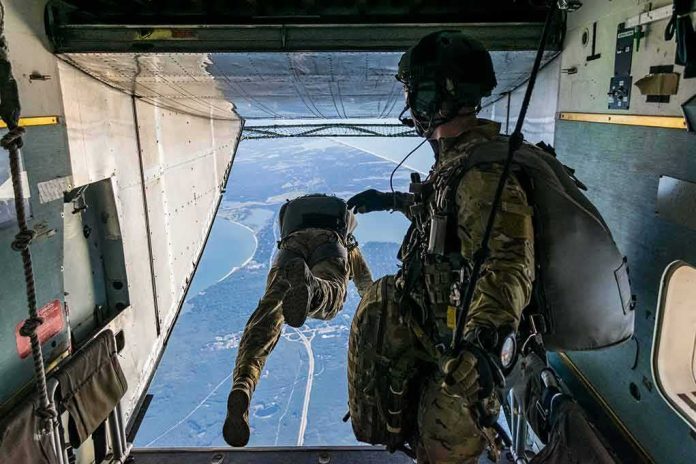
Independent reporting amplifies the conflict. A local investigation reported no after-action reports or corroborating records that Moore led soldiers in a direct-fire engagement. It also highlighted that Moore served with the 82nd Airborne Division but disputed that he held a paratrooper billet during deployment. That means no jump pay and no assigned airborne position, according to the rater and those reports. The precision here matters because “with the 82nd” is not the same as “as a paratrooper”.
What The Records And Timeline Show
Contemporaneous records reviewed by local outlets place Moore on active duty from August 2005 to March 2006, and in Afghanistan from mid-August 2005 to mid-March 2006. Reporting identifies his attachment to the 1st Brigade, 82nd Airborne Division during that tour. Those facts anchor the debate in something solid: he served in theater with that brigade. The dispute is not whether he deployed. It is what he did and whether public language oversold his role.
Moore’s former supervisor adds specific boundaries to that role. He says Moore coordinated the brigade information-operations working group, called counterparts, pulled updates, and helped staff answer commanders’ questions. That is standard staff work inside a brigade headquarters footprint. It can be important, even in a combat zone, but it is different from leading a platoon through fire and maneuver. Precision here is not petty; it is how the Army defines duty and merit.
Awards, Optics, And The Bronze Star Back-and-Forth
A separate thread touches awards and optics. A report raised questions about whether Moore received a Bronze Star Medal in 2006 and what later reviews said about that claim. One account notes a recommendation for a Bronze Star by a senior officer, while critics cite photos and paperwork showing an Army Commendation Medal presentation at the time. The rater says he was not consulted on a retroactive Bronze Star review and would not have supported it. The award paper trail remains under a spotlight.
🚨 WES MOORE’S FORMER ARMY SUPERVISOR DISPUTES GOVERNOR’S CLAIMS OF LEADING SOLDIERS INTO COMBAT IN AFGHANISTAN
Just days after winning reelection, Maryland Gov. Wes Moore faces renewed scrutiny over his military record following an interview with the officer who directly…
— MDBayNews (@MDBayNews) November 10, 2026
The center of gravity remains Moore’s public phrasing. American voters do not need every acronym, but they respect clean lines between “deployed with an airborne brigade” and “led paratroopers in combat.” If Gottschling’s account holds, then the simplest fix is the hardest in politics: say exactly what happened, no more, no less. That approach aligns with common sense and honors those who actually kicked in doors or held ground under fire.
Why This Story Sticks: The Pattern In U.S. Politics
This fight mirrors a familiar pattern. Campaigns compress long résumés into short lines. That shorthand often blurs lines between serving in a war zone and serving during a war, or between being assigned to a storied unit and filling a staff seat near it. Recent cycles show how that blur creates backlash. Media have tracked similar disputes, including those around Tim Walz’s public phrasing and how voters weigh service claims in modern races.
The lesson is durable. Service deserves respect, and words deserve discipline. Most voters can hold two thoughts at once: Moore deployed and did real work; combat leadership claims demand proof. The rater’s on-the-record account, specific and accountable, carries weight. If Moore has documents that support his version, he should release them wholesale and let the record stand. Until then, the credible map of his tour points to staff duty, not combat command.
Sources:
twitchy.com, nymag.com, foxbaltimore.com, wjla.com, militarnyi.com, wcbm.com