

Scientists found heme, the core blood pigment, locked to cell-like bodies inside a 115-million-year-old dinosaur bone.
Story Snapshot
- Ellipsoid, cell-like structures sit inside blood vessel canals of the bone.
- Chemical tests flagged iron, carbon, and nitrogen consistent with heme.
- Lab methods detected heme B and related molecules in targeted extracts.
- Manganese mineral hausmannite appears to have armored shapes and residues.
What the team actually found inside the bone
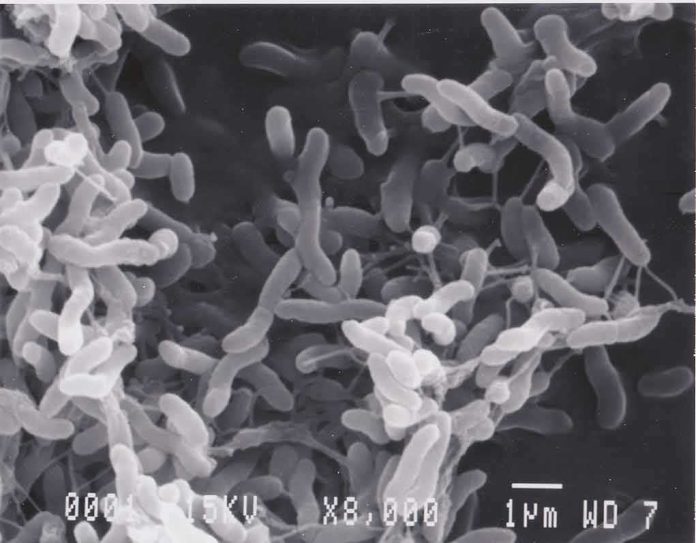
Researchers thin-sectioned a dinosaur hind-limb bone from Brazil and peered into its tiny blood vessel canals. They reported packed ellipsoids where red blood cells would sit in life. Maps of the elements showed those bodies were rich in iron, carbon, and nitrogen, which matches the chemistry of heme. That is why the claim has teeth. The find is not a stain in rock. It is a spatial match of vessel canal, cell-like body, and blood-linked chemistry.
The analysis did not stop with looks. The team extracted material and ran high-performance liquid chromatography with mass spectrometry. The signal they report includes heme B and heme-B-derived compounds. That fits the main oxygen-carrying part of hemoglobin. The team also said those signals differ from the surrounding matrix, which argues against a loose contaminant that soaked the bone from outside. The case blends shape, location, elements, minerals, and molecules in one story.
The proposed lockbox: hausmannite armor
The rock record rarely preserves soft tissues. Here, the team points to a manganese oxide called hausmannite. They report this mineral coats or replaces the cell-like bodies in the canals. That coating can stabilize shape and slow breakdown of organic traces. Curtin University described hausmannite as key to protecting both the form and the blood-linked chemistry over deep time. That offers a concrete path for how fragile heme signals could survive for over 100 million years.
That preservation idea matters because skeptics often ask what stopped oxygen, water, and microbes from shredding every trace. A mineral jacket answers that in plain terms: seal the structure early, reduce decay, and lock in some chemistry. The proposed match of ellipsoids, heme-like signals, and hausmannite in the same micro-spaces gives the mechanism weight. It does not mean every ellipsoid is proven blood, but it does make a clean geological story that is testable in other fossils.
Where the debate stands and what would clinch it
Experts who study ancient tissues urged caution. Mary Schweitzer questioned whether the team nailed the heme call and said the shapes and sizes may not meet strict red blood cell standards. Evan Saitta said the heme could be real but the rounded bodies might be manganese blobs, not cells. Mauricio Barbi called the match consistent with mineralized blood cells but said the call still needs interpretation rather than a view of intact cells or hemoglobin.
Chemically confirmed dinosaur blood just turned up in 115-million-year-old bones — heme from hemoglobin, locked in fossilized red cells. First definitive molecular proof.
Source: PNAS / Curtin University, Grice et al.— John (@Ut_Credamus) November 6, 2026
Those cautions track with common-sense guardrails. Minerals and microbes can make convincing look-alikes, so shape alone is not enough. The strength here is the stack: shape in the right canal, elements that fit heme, a mineral shield that can preserve, and a mass spec hit for heme B. To close the case, labs should show heme compounds stuck to single ellipsoids at micro-scale, share raw spectra and blanks, and repeat the find in other bones with the same mineral recipe.
Why this matters beyond headlines
The soft-tissue wars in paleontology have raged for decades. Many claims fell short because they leaned on looks or weak chemistry. This study pushes past that by tying together location, morphology, mineralogy, and molecular signals in one fossil. If independent groups replicate the work and nail the co-localization at tiny scales, museum drawers worldwide could hold more than bones. They could hold micro-fossils of ancient physiology, from blood to bits of tissue chemistry.
Sources:
sciencenews.org, curtin.edu.au, sciencealert.com, abc.net.au