

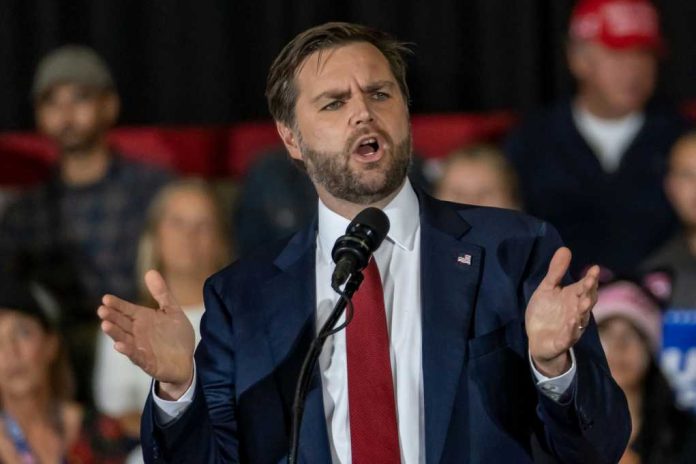
JD Vance said the quiet part out loud: Republicans lost because of the Iran war, and he spelled out what voters want next.
Story Snapshot
- Vice President JD Vance blamed the midterm losses on the Iran war and said, “The reason we lost is the war.”
- Vance listed four voter priorities: end the war, fight costs and inflation, put America First, and reset ties with Israel.
- He said many 2024 Trump-Vance voters chose Democrats in 2026 over these issues.
- President Trump said the war was “part of” the result but defended it, showing a clear split at the top.
Vance’s Post-Election Charge: The War Cost Republicans
Vice President JD Vance moved first and fast after the midterms. He went on X and wrote, “The reason we lost is the war.” The timing and clarity stood out. He did not hedge or bury the lead. He connected the dots to real voters and said many who backed the Trump-Vance ticket in 2024 voted for Democrats in 2026. Major outlets reported his claim as his core explanation, not a stray remark. The blunt takeaway landed with force.
Vance’s case linked policy to pocketbook pain. He said voters wanted four things: end the Iran war, lower costs, put America First, and change the United States’ relationship with Israel. He placed cost of living right beside foreign policy, not as an afterthought. Reporting tied the conflict to higher oil prices during an already expensive year, which made his link feel concrete to families watching gas and grocery bills climb. That is a simple, direct chain reaction.
The Four-Point Voter Read: End War, Cut Costs, America First, Reset Israel Ties
Vance did not offer a vague “new direction.” He listed four answers he said came from voter research he trusts: stop the Iran war, focus on inflation and costs, prioritize America First, and change the United States’ relationship with Israel. Reports repeated that this came from a pollster he respects. That structure matters. It turns a loss postmortem into a to-do list. It also frames a coalition that pairs peace abroad with relief at home and a sharper national interest lens.
That mix aligns with long-running midterm patterns. The president’s party usually takes a hit in midterms, as voters check power and react to the moment. A costly or controversial war can amplify that penalty when kitchen-table prices rise and patience wanes. Political science has long shown the president’s party tends to underperform in midterms, so any single cause must ride on top of that headwind. Vance’s model tries to do exactly that—put war and wallets at the front of the story.
A Clear Contrast With Trump, Without a Total Break
President Trump did not fully embrace Vance’s verdict, but he did not dismiss it either. Reporting said Trump called the war “part of” the outcome, yet still defended the decision. That creates a visible split at the top: Vance wants recalibration now; Trump argues the policy case while nodding to some political cost. For conservatives, the choice set is simple: measure what voters just said about war and prices and decide how much daylight to put between strategy and loyalty.
The results on Tuesday amounted to a direct and unambiguous voter repudiation of the "populist" economic nationalism represented by JD Vance and the NatCon/Postliberal/New Right.
Voters rejected tariffs. They rejected the admin's failure to do anything about affordability. They… pic.twitter.com/vem7HORkFD
— Phil Magness (@PhilWMagness) November 5, 2026
Media coverage framed Vance’s statement as both diagnosis and positioning. Outlets said he moved to distance himself from the war after the losses and floated a path some read as a preview of 2028. That frame does not cancel his claim; it underlines its stakes. If voters punished war and high costs, the right-of-center playbook must change. If not, then candidate quality, turnout, and local factors did most of the damage. Vance bet that policy, not vibes, swung key voters.
Does Vance’s Theory Fit The Numbers Voters Live With?
Families saw prices jump and felt energy shocks while war footage rolled. NBC’s reporting linked the conflict to higher oil prices in a tight economy. That is not an academic curve; it is the daily pump price. When budgets break, voters often break ranks. Vance’s claim that some 2024 Trump-Vance voters switched in 2026 fits that pattern and gives Republicans a repair plan that is tangible: end the war, cut costs, serve home first, and recalibrate in the Middle East to reduce spillover.
One caution belongs in the file. The findings Vance cited come through his own summary rather than full public release of the poll details. That does not erase his case, which rests on timely reporting and direct quotes, but it invites follow-up: show the instrument, the sample, and the cross-tabs. Until then, his four-point map remains a pointed reading of the electorate, not a final forensic. The political question is simpler: do Republicans act now or wait for another election to test it?
What Happens Next If Republicans Take Vance’s Route
Adopting Vance’s plan would mean drawing a clean line: shut down the Iran war effort, attack inflation with energy-first policy, and define America First as practical restraint abroad and stability at home. The Israel plank would need details on aid, arms, and diplomacy to avoid drift. The upside is unity around family budgets and fewer foreign entanglements. The risk is a crack with party hawks and a public fight over deterrence. The midterms turned that theory into a choice.
Sources:
facebook.com, cbsnews.com, bbc.com, boston.com, cp24.com, lemonde.fr, nbcchicago.com