
President Trump says he will become “Mr. Veto” if Democrats capture Congress, and he is ready to use that power until they deal.
Story Snapshot
- Trump pledged to veto Democratic bills and wear the “Mr. Veto” label with pride.
- He framed vetoes as leverage to force talks after “a month or two” of standoffs.
- He called the veto his “ultimate power” and said he is prepared to use it.
- The Constitution makes vetoes a reliable tool when the other side lacks override votes.
Trump’s Plan: Veto First, Negotiate Second
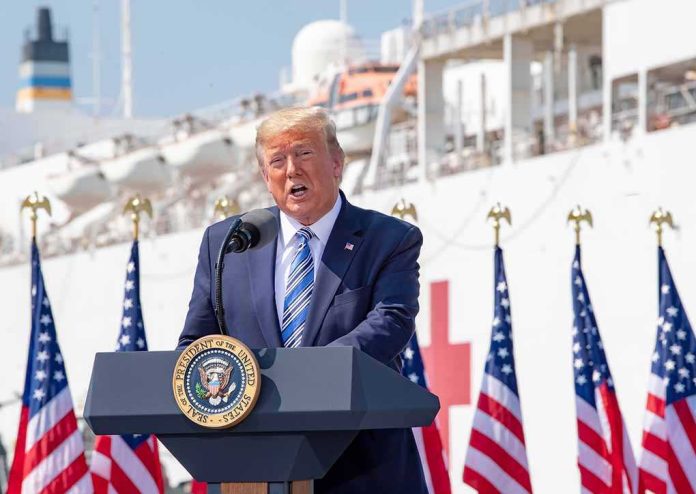
Trump said he would block Democratic bills with his signature power if they retake Congress. He told interviewers he would be “Mr. Veto,” and that Democrats would come to the table after they hit a wall for “a month or two”. He tied the promise to a simple picture: Democrats pass bills, he vetoes, then talks begin on his terms. He also stressed he has the “ultimate power — it’s called ‘veto’” and that he is ready to use it when needed.
Trump’s comments describe a playbook built on constitutional ground. A president can reject a bill and send it back with objections. Congress can try to override, but it needs two-thirds in both chambers to win. That bar is high, so a veto often sticks and resets the bargaining line. His approach echoes decades of divided government tactics where presidents use the veto to block and then shape the next draft.
Why Veto Power Works When Votes Are Thin
The veto turns lawmaking into a test of math and stamina. If Democrats cannot reach two-thirds in both chambers, they must revise or pause. That is the core of Trump’s leverage claim. History shows Congress rarely musters the votes to override. Since the Founding, only a small share of presidential vetoes have been overridden, which underlines why a veto can hold the line and force a rethink. This track record matches Trump’s bet on time and pressure, not speeches, to move talks.
The system also channels responsibility. If a vetoed bill cannot clear the higher bar, lawmakers face a choice: bargain or stall. Conservative readers should see a clear value here. The veto can stop new spending sprees, sweeping rules, or surprise add-ons. It forces clarity and narrower bills. It also protects the executive from being boxed in by rushed measures that skip real debate. That is a guardrail, not gridlock for its own sake.
What “Mr. Veto” Could Mean For the Next Session
Appropriations and big-ticket policy would feel the heat first. Funding fights test overrides, because shutdown risk raises the stakes. Trump’s plan signals he will not sign catch-all bills loaded with partisan demands. Lawmakers would need to break issues into smaller pieces, trim asks, or accept policy trades that meet his standards. If Democrats lack the votes to override, the quickest path becomes deal-making around a tighter core, which is exactly the outcome he predicts.
The plan’s teeth come from the override math and the calendar. Deadlines multiply pressure. Each failed end-run at two-thirds pushes negotiators back to the table. The White House can sequence vetoes to keep talks focused, keep riders off bills, and demand simple, clean texts. That approach values transparency and cost control, which aligns with fiscal restraint and limited government. As Trump put it, “If Democrats send bills, you veto them.” Then you talk about what is actually needed.
Constitutional Baseline, Political Upside
The power flows from the Constitution and not from a novel theory. The president vetoes. Congress can override with two-thirds. If it cannot, it adapts. This is the reliable “negative power” presidents use to stop bad law and set terms for better law. Trump’s framing raises the stakes by making the veto a standing rule, not a threat he saves for one bill. The effect is simple: fewer giant packages, more targeted deals, and clearer trade-offs before any law lands on his desk.
Sources:
redstate.com, mbiz.heraldcorp.com, wowktv.com, cbsnews.com, en.bloomingbit.io, academia.edu, congress.gov