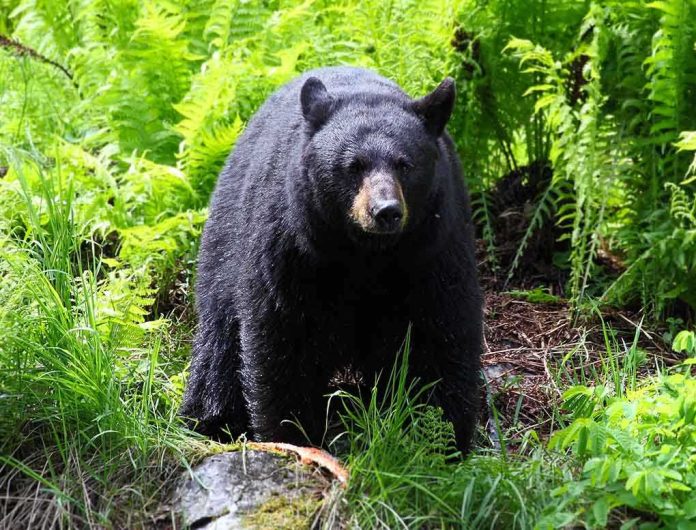
When a bear learns that porches, garbage cans, and pet food bowls pay better than chokecherries, the management script narrows quickly: prevention gives way to removal. Montana’s cull of 14 black bears near Bozeman wasn’t an aberration; it was the predictable end of a feedback loop we created.
The Short Version
- Wildlife officers euthanized 14 black bears near Bozeman after finding they were heavily food-conditioned and unafraid of people.
- Investigators tied the behavior to alleged illegal supplemental feeding; once bears lose avoidance of humans, nonlethal fixes rarely work.
- This fits a well-established management pattern: secure attractants first, haze when possible, remove when risk becomes chronic or acute.
- The hard truth is communal: people’s food and garbage decisions determine whether bears live wild—or are removed.
What “food-conditioned and habituated” actually means
Two terms do the analytic heavy lifting in human–bear conflict: food conditioning and habituation. A food-conditioned bear has learned to associate people and human spaces with calories—garbage, pet food, birdseed, livestock feed, bait, and intentional handouts. Habituation is the corresponding erosion of wariness when repeated proximity brings no consequences. Together, they rewire a bear’s risk–reward calculus: why roam for acorns at night if daylight porches yield easy meals? Agency reviews across North America treat these traits as the primary drivers of conflict, and the factor people can most readily change by securing attractants and stopping supplemental feeding.
That is the backdrop for the Bozeman case. Montana Fish, Wildlife & Parks (FWP) wardens and wildlife staff responded to a report of alleged supplemental feeding at a residence north of the city. Over two days on the property, investigators found multiple black bears that were “extremely food conditioned and habituated to human presence,” behavior FWP characterized as no longer relying on natural foods and posing a public safety risk. Euthanasia followed for 14 bears; one cub was diverted for potential placement by a wildlife facility. Alleged supplemental feeding is illegal under state law and is the mechanism most consistent with the behavioral shift officers documented.
How agencies decide when nonlethal stops working
Wildlife managers do not begin with lethal tools. Standard playbooks emphasize prevention—bear-resistant trash cans, secured attractants, electric fencing for poultry and apiaries—and, when needed, aversive conditioning such as hazing with beanbags or dogs to restore avoidance. But those tools lose potency once bears repeatedly cash in on human foods. Relocated bears often return to conflict sites or export the problem to new neighborhoods; “successful” translocation in the literature is typically temporary. State and federal guidance reflects that once food conditioning is entrenched and fear of people is gone, public-safety calculus shifts toward removal, including euthanasia where risk is persistent or immediate.
Montana’s action reflects this template rather than a deviation from it. The reported on-site investigation, the specific diagnosis of extreme food conditioning, and the clustering of many bears at a single residence are all red flags for managers: the resource subsidy is rich, accessible, and ecologically distortive; the animals are already generalizing to other homes and camps; and the neighborhood risk is rising with each reinforcement. In that posture, hazing is a speed bump, not a cure; relocation becomes a waystation, not a solution.
What the evidence supports—and what it doesn’t
On the core facts, the public record is aligned. Multiple outlets attribute to FWP the same sequence: a report of alleged feeding, a site visit near Bozeman, bears judged extremely food-conditioned and habituated, and the subsequent euthanasia of 14 animals. An FWP game warden summarized the shift succinctly: these bears “were unafraid of humans and stopped relying on natural foods”. The legal frame is straightforward: Montana prohibits providing supplemental feed to game animals, including bears (Mont. Code Ann. 87-6-216).
Counter-voices do not contest that chain; they contest the human behavior that triggered it. Conservation advocates and local residents have repeatedly argued, in this and other Montana conflicts, that the problem starts at the trash can, bird feeder, or backyard handout. One advocate’s aphorism, “the community loads the gun,” is brutally apt: when bears are fed, managers are left to choose between risk tolerance unacceptable to the public and removal unacceptable to many conservationists. In other words, the critique assigns moral agency chiefly to people—whose decisions control whether the lethal endpoint is reached—not to the officers applying standard policy at the end of the chain. That framing is consistent with agency guidance and the academic literature, which both emphasize that human food access is the controllable variable in most conflicts.
Why this keeps happening near fast-growing mountain towns
Bozeman is a near-perfect laboratory for conflict acceleration: rapid exurban growth, an outdoor culture that blurs backyard and backcountry, and an omnivorous, highly intelligent omnivore whose nose can parse a peanut butter smear a mile off. Subdivisions push into travel corridors and oak–aspen patches bears have used for decades; garbage schedules create predictable jackpots; the false intimacy of frequent sightings normalizes proximity. In dry mast years or during poor berry crops, the incentive to cross the asphalt line spikes. If even a handful of households supply calories—intentionally or by sloppiness—bears learn, teach their cubs, and return.
This is not unique to Montana. Yosemite cut bear–human incidents by an order of magnitude by systemically removing human food availability through bear boxes, enforced regulations, and consistent messaging, with lethal removal reserved for the few individuals that breached repeatedly despite aversive conditioning. The principle travels: reduce access, conflict falls; ignore access, conflict grows. Policy debates about hunting seasons, quotas, or predator removal programs matter for population dynamics and ethics, but they are orthogonal to the proximate mechanism driving these specific urban-interface events: human food rewards.
The hard edge of ethics: unavoidable tradeoffs once conditioning sets in
Many readers ask, could rehabilitation have saved these bears? For orphaned cubs, sometimes; for adult or subadult bears deeply conditioned to human foods, almost never. Rehabilitation facilities are designed to avoid imprinting bears on humans; they are not set up to erase a learned association that the wider landscape continues to reinforce. Release sites are porous; unsecured attractants downstream reinstall the behavior. Managers face an ugly triage: leave the bears and accept elevated risk of serious encounter; relocate and gamble on displacement effects; or remove. Their choice in Bozeman aligns with established practice when conditioning is extreme and clustered around homes.
Ethics do not end there. The just response is upstream: require bear-resistant containers in interface neighborhoods, subsidize electric fencing, enforce feeding bans without fear or favor, and—most importantly—normalize community norms where unsecured attractants are treated like drunk driving: a neighbor’s negligence endangers everyone.
RIP @bearlyable2
A 15-year-old was charged by a grizzly bear after walking around the corner of his own chicken coop. And his family, in Montana, thought they were dealing with a cinnamon-phase black bear after it had already raided their chickens earlier in the day. When it… pic.twitter.com/zVL7uSxQoq— 🇺🇸 Thropic Tunder (@oldman_killins) October 2, 2026
What to do so we don’t repeat this story
The prevention toolkit is practical, not heroic. Use certified bear-resistant trash containers; freeze odorous waste and put bins out the morning of pickup; remove bird feeders when bears are active or switch to hummingbird feeders hung well away from access points; lock garages and secure pet food and barbecue drippings; electrify small livestock and apiaries; pick fruit promptly and glean drops. Neighborhoods that act collectively—HOA standards, municipal ordinances, and consistent enforcement—shift the payoff structure for bears enough to preserve their natural foraging patterns and our tolerance. Where communities adopt those measures at scale, agencies use lethal tools less.
Bottom line
Montana’s removal of 14 black bears near Bozeman followed a familiar arc grounded in both agency policy and behavioral ecology: alleged illegal feeding created strong human-food rewards; bears lost fear and shifted to human spaces; nonlethal options offered little prospect of reversal; officers euthanized the animals. That outcome is tragic and, absent upstream change, repeatable. If we want fewer dead bears and safer neighborhoods, the lever is not at the trap; it’s at the trash can.
Sources:
washingtontimes.com, einpresswire.com, ktvq.com