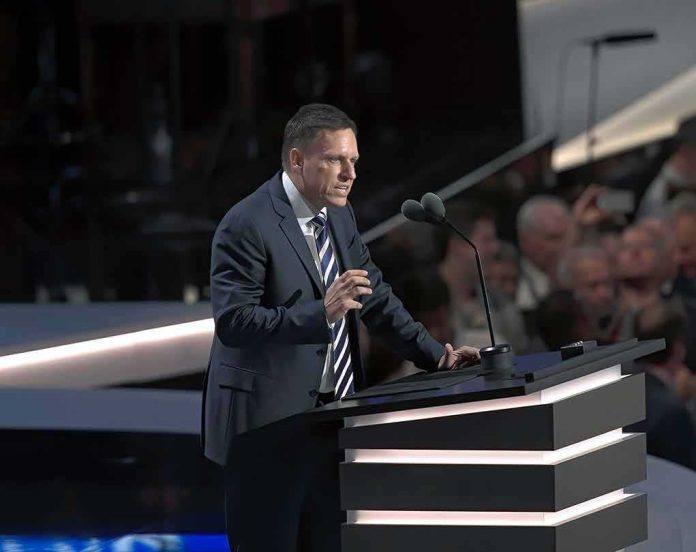
Peter Thiel said the United States “should not have done” the Iran war, and that single line cracked a fault line on the American right.
Story Snapshot
- Peter Thiel criticized the Iran war, saying it should not have been launched.
- He cited “a lot of mistakes” and doubts about U.S. hard and soft power.
- The comments mark a rare public split with President Trump from a key donor.
- The debate echoes lessons from Iraq and Afghanistan on force versus outcomes.
Thiel’s Remark And Why It Landed With A Thud
Peter Thiel told a private audience on October 12 that he is skeptical of the Iran war and that “we should not have done it,” according to audio reported by Politico. He added that “a lot of mistakes” were made, and he questioned whether the United States holds the right mix of hard power and soft power to win. The message matters because Thiel backed President Trump for years. When a heavyweight donor breaks ranks on war, people in Washington listen.
Thiel did not outline a full plan for what should replace war. But the thrust is clear: firepower alone does not settle politics. That point tracks with two decades of study after Iraq and Afghanistan. Analysts warned that toppling or striking an enemy is the easy part. The hard part is shaping the peace, and the United States often lacks the tools, patience, and local knowledge to lock in gains. Thiel’s gripe rides on those lessons, and it puts a sharp edge on a growing conservative debate.
What The White House Said The War Was For
President Trump framed the war’s goals in stark terms. He said Iran must never have a nuclear weapon and pointed to strikes aimed at its long-range missile program and broader threats to Americans and the region. He later said the operation destroyed Iran’s nuclear program and urged economic pressure until Iran ends attacks on shipping, abandons nuclear aims, and stops backing terror groups. These aims speak to core security concerns many conservatives share: deter threats, protect trade routes, and avoid another forever war.
Those objectives resonate with voters who want strength without drift. The tension shows up in the gap between clear aims and messy means. Missile plants can be bombed. Sea lanes can be patrolled. But changing a hostile regime’s behavior is not only a military problem. It needs diplomacy, economic levers, allied burden sharing, and a stable endgame. That is where Thiel says the plan came up short. His critique does not dismiss the threat; it questions the tool kit, timing, and cost-benefit trade.
The Conservative Litmus Test: Power, Prudence, And Payoff
Conservative foreign policy has long balanced peace through strength with war only as a last resort. Thiel’s claim sits in that frame: if victory needs more than bombs, then count the non-military demands up front and be honest about them. Studies of Iraq and Afghanistan found that America often undercounted the work after the shooting stopped and overestimated what force could fix. Common sense says do not start what you cannot finish on terms that serve U.S. interests at a price the public can carry.
Peter Thiel condemning the war with Iran while remaining financially connected to the defense industry he helped build is a remarkable contradiction.
Palantir, which he cofounded, supplies military intelligence and targeting technology, while his Founders Fund backs Anduril, a… https://t.co/EJ7QzBg3bQ— EndGame Macro (@onechancefreedm) October 23, 2026
War supporters answer that strikes can reset deterrence and buy time. They point to declared gains against nuclear and missile targets and stress that Iran’s attacks on shipping require a hard reply. Thiel’s allies counter that tactical wins can still lose the plot if they trigger wider fights, empower proxies, or demand open-ended commitments. Both sides accept the threat is real. The dispute is classic: can arms achieve the political result America wants, at a cost and timeline that make sense?
What Breaks Next On The Right
Thiel’s break will test donor circles, think tanks, and rising lawmakers. Some will double down on decisive force to stop Iran’s malign acts. Others will push for a narrower mission and a tighter exit ramp. Expect louder talk about alliance math, sanctions bite, domestic industry capacity, and the readiness of the United States to surge and sustain. Expect, too, more demands for clear metrics beyond targets hit: shipping secured, hostages safe, proxies deterred, and a glide path that avoids a long grind.
Voters over 40 have seen this movie. Smart policy fuses steel with strategy. If Thiel’s warning moves the debate toward tighter goals, tougher oversight, and a real theory of victory, that serves conservative values: strength, restraint, and accountability. If the war’s aims, costs, and end state line up, support will hold. If not, more voices will echo Thiel’s short verdict: we should not have done it. That is the pressure point to watch in the weeks ahead.