
The moment America’s enemies lose big overseas, America’s cities quietly brace for payback at home.
Quick Take
- After U.S.-Israel strikes in Tehran reportedly killed Iran’s top leader and senior officials, the FBI raised counterterrorism and intelligence teams to high alert.
- Major cities increased patrols at “soft targets” like diplomatic hubs, cultural landmarks, and religious sites, even as officials said they had no specific, credible threats.
- Officials and experts pointed to retaliation risks from Iranian-backed groups, possible sleeper cells, and lone-actor violence inspired by events abroad.
- DHS assessed a low likelihood of a physical attack but warned that cyber retaliation and online agitation can spike quickly after headline events.
Operation Epic Fury and the domestic security ripple effect
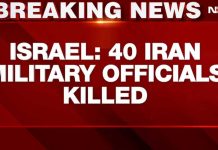
Operation Epic Fury, described as joint U.S.-Israel airstrikes in Tehran on Saturday, February 28, 2026, created an immediate homeland-security aftershock. Reports said the strikes killed Iranian Supreme Leader Ayatollah Ali Khamenei and roughly 40 other high-ranking officials. By that evening, FBI Director Kash Patel directed counterterrorism teams to a heightened alert posture, a signal to field offices and Joint Terrorism Task Forces to move faster, share intelligence tighter, and posture resources for rapid response.
That fast pivot matters because it tells you how the government views the risk window: the first hours and days after a major strike. Federal officials still emphasized they had not identified a specific credible threat. That combination—no defined plot, but elevated alert—often frustrates the public. The logic is simple: deterrence and disruption work best before a tip becomes a “credible threat,” not after a target has already been chosen.
Why big-city “soft targets” get attention first
New York City, the Delaware Valley, and other major metros moved quickly to increase visible patrols at sensitive sites. The playbook prioritizes places where crowds gather and symbolism runs high: the United Nations and diplomatic corridors, prominent cultural venues, and houses of worship across faiths. These locations create a twin incentive for a would-be attacker—easy access and maximum attention. Extra uniforms also calm nerves, which helps prevent panic-driven mistakes by citizens and even by institutions.
The Austin, Texas bar shooting early Sunday morning, March 1, 2026—two killed and 14 wounded—showed why investigators keep an open mind. Federal authorities examined potential links, according to reporting, even though early facts in many mass shootings point to motives that are personal, criminal, or opportunistic rather than international. That caution can feel like overreach until you remember how often lone actors borrow global grievances as an accelerant for local violence.
Hezbollah, Hamas, and the “proxy” problem Americans can’t vote away
Iran’s ability to retaliate does not rely on conventional forces crossing oceans; it relies on proxies, facilitators, and inspiration. Hezbollah and Hamas, both long described as Iranian-backed, sit at the center of that concern. Analysts have argued that cells or sympathizers could attempt attacks, support operations, or logistics—money movement, surveillance, forged documents—without an overt Iranian fingerprint. That makes the threat harder to spot and easier to deny, a combination that complicates deterrence.
History explains why officials react sharply after a dramatic strike. U.S.-Iran tensions run back to the 1979 Islamic Revolution and include major attacks attributed to Iranian-backed actors, including the 1983 Beirut barracks bombing that killed 241 U.S. personnel. That legacy shapes today’s response posture: government leaders fear the “delayed fuse,” where retaliation comes weeks later, after initial vigilance fades, and the target is chosen for vulnerability rather than strategic value.
The home-front pattern: intimidation, plots, and online heat
Domestic cases tied to Iran don’t always look like movie terrorism. Some look like intimidation and targeted plots. Reporting cited alleged Iranian efforts in 2021–2022 aimed at U.S.-based dissidents, including schemes involving surveillance and attempted abduction in New York. Those cases matter for two reasons. First, they show intent to operate on U.S. soil. Second, they demonstrate patience: operations can take time, and they can hide inside ordinary America—rentals, rideshares, prepaid phones, and small transfers.
Law enforcement also watches the temperature online after major events. Officials described monitoring pro-Iran social media chatter and protests for hostile rhetoric, while stressing that rhetoric is not the same as an operational plan. That distinction matters in a free country. A conservative, common-sense standard should be consistent: protect lawful speech, punish actual criminal planning, and avoid smearing entire communities for the acts of foreign regimes or terror groups. Precision keeps legitimacy intact.
DHS says “low risk,” experts warn about the gap between odds and consequences
DHS assessed a low likelihood of an attack, while also flagging the possibility of cyber retaliation. Both can be true. Most days pass without violence, even during crises, but a single successful strike against a soft target can carry outsize consequences. Some experts leaned more pessimistic, arguing the border and resource strain increase vulnerability. That claim aligns with a conservative view that a nation’s first duty is control of its own territory—because screening and tracking become harder when the system is overwhelmed.
Resource strain is the unglamorous subplot that decides outcomes. Reporting described a partial DHS shutdown adding pressure just as agencies surged posture. When federal bandwidth shifts to other priorities, local departments carry more of the burden—overtime, targeted patrols, liaison work, and “see something, say something” follow-ups. Forecasts for 2026 also emphasized lone-actor and small-cell threats that blend ideology with personal grievance, the kind that can slip past traditional tripwires.
What this surge really signals to the public
Heightened patrols and high-alert directives are not proof that an attack is imminent; they are proof that officials believe the incentive structure has changed. Tehran’s leadership losses, vows of retaliation, and the global attention around the strikes all widen the pool of people who might act—whether directed, enabled, or merely inspired. The best outcome looks boring: extra police presence, more intelligence sharing, and nothing happens. That “nothing” is often the product.
Americans over 40 have seen this cycle before: overseas shock, domestic caution, then the slow fade back to normal—until the next crisis. The smarter question is not “Why are they scaring us?” but “What routines keep us free and safe without turning cities into fortresses?” Visible patrols at soft targets, disciplined investigation of suspicious activity, and serious border control are not political theater. They are the practical middle ground between complacency and panic.
Sources:
FBI, Big Cities Increase Patrols and Counterterrorism Efforts Following Military Strikes on Iran
2026 Homeland Security Threat Forecast Part I: Terrorism