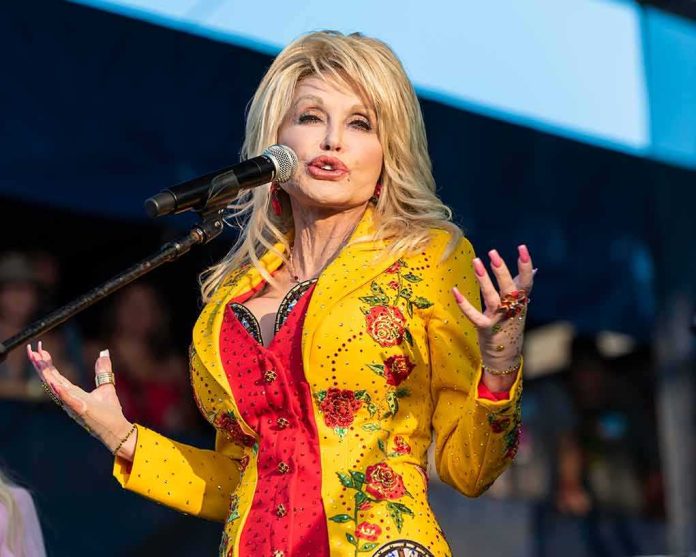
Dolly Parton died at 80 after what her representatives called a brief battle with cancer, closing a life that changed music and gave millions of books to kids.
Story Snapshot
- Family announced Parton died in Nashville on Aug. 25, 2026.
- Representatives cited a brief battle with cancer as the cause.
- She died surrounded by loved ones at Vanderbilt-Ingram Cancer Center.
- Her final days followed recent, public health concerns she acknowledged.
Family Announcement Named Time, Place, and Peaceful Passing
Her family said Dolly Parton died on Aug. 25, 2026, in Nashville. Newsrooms received the notice within minutes, and coverage spread worldwide within hours. Federal Bureau of Investigation (FBI) agents were not involved; this was a family announcement, not a criminal matter. Outlets reported that nephew Bryan Seaver shared the news in a video post. The family said she died peacefully. That single word matched how the public saw her live: with grace and grit to the end.
Representatives and major outlets placed her death at Vanderbilt-Ingram Cancer Center, where loved ones gathered around her bed. The setting fits her homebound roots. She built careers from Nashville studios and kept faith with Tennessee charities. The hospital detail is not trivia. It signals she was receiving focused cancer care in her final days and that the family wanted that known, likely to close the door on rumor and to honor the clinicians who stood watch.
Cause Of Death Stated As A Brief Battle With Cancer
Her publicist said cancer took her life after a short fight. Reporters repeated that specific phrase across outlets the next day, which is normal when families choose concise language. The coverage did not name the cancer type. It did not need to. The point was clear: this was fast, hard, and private. Early wire notes that skipped a cause were soon updated as the representative statement moved through desks and onto air. The settled record cites cancer as the cause.
Her last interviews hinted at health concerns. She told People she had ignored some issues while caring for her husband, Carl Dean. That comment reads different now. It was a window that she chose to open a crack, not a full medical chart. Americans over 40 know that path. We push through, we care for our own, and only later do we name the cost. Her words framed her final season as duty first, then rest.
An American Life Measured In Songs, Jobs, And Books
The arc of her life is simple and large. She wrote songs that paid bills for whole towns. She built jobs with Dollywood and tied her brand to hard work and joy. She funded child literacy with the Imagination Library and sent free books to homes that never had them before. People trusted her because she gave more than she took. When culture grew loud and mean, she stayed kind and clear. That is why this loss feels personal across lines that usually divide.
Her death drew fast tributes because her deeds are easy to list. From Jolene to 9 to 5, she made hits that crossed decades without dust. On screen, she carried humor without spite. In boardrooms, she showed how a clear head and a soft voice can still win the day. The lesson is not complex. Build things. Share credit. Keep your word. American conservative values call that common sense. She simply lived it, every year, in public view.
Why The Details Matter, And What Comes Next
Clear facts spare families and fans from rumor. The family said when, where, and how she died. The representatives named cancer as the cause. Reporters echoed that core. That is enough. One short caveat remains: outlets did not report the cancer type. Families control medical privacy in death as in life. Respect for that choice also guards her legacy, which is about work, faith, and giving, not the lab code on a chart.
Public memorial plans will follow the family’s lead. Expect a service that centers music and mission. Expect book drives, scholarships, and quiet gifts with real impact. Fans will sing her songs this week, but the better tribute is simple. Read to a child. Tip a worker on the late shift. Show up for family. She wrote the playbook in plain words: find the melody, do the work, and love your people. That story does not end here.
Sources:
thegatewaypundit.com, npr.org, theguardian.com, abcnews.com, nytimes.com, reuters.com