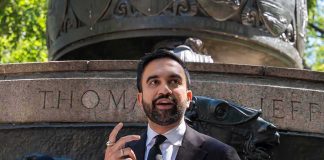

Declassified Federal Bureau of Investigation files say a suspected Chinese operative pushed illegal donations toward Eric Swalwell’s campaign while building access to his office.
Story Snapshot
- Federal Bureau of Investigation (FBI) records describe a foreign influence effort tied to Christine Fang.
- The files report evidence of illegal straw donations tied to foreign nationals and Fang’s role.
- Swalwell admitted a physical relationship with Fang years earlier, according to the records.
- The House Ethics Committee later closed its review without a finding of wrongdoing by Swalwell.
What The Declassified Files Add To The Public Record
Newly released documents describe how agents tracked a suspected Chinese influence network around California politics in the early 2010s. The files state investigators developed evidence that Christine Fang solicited illegal straw donations for then-Representative Eric Swalwell’s campaign, which foreign nationals are barred from making under United States law. The records also recount contact that placed Fang close to Swalwell’s circle. The documents come with redactions and do not show criminal charges against Swalwell being brought or recommended in the end.
China Used Sex, Donations, Planted Interns to Influence US Political System: Declassified Docs
Nearly 150 pages of newly declassified FBI documents detail the relationship between suspected Chinese Communist Party (CCP) intelligence operative Christine Fang and former Rep. Eric… pic.twitter.com/qjqX2ODdUd
— Spotlight on China (@spotlightoncn) August 18, 2026
ABC reporting on the files says Swalwell told investigators he had a physical relationship with Fang, whose English name is Christine, during his rise in local politics before entering Congress. That detail matters because it shows how influence often starts: not with briefings or classified files, but with time, trust, and access. The documents also reflect standard counterintelligence practice: brief the official, cut contact, and assess damage. That pathway appears consistent with public accounts from the period.
The Donation Allegations And Why They Resonate
The reported straw-donor scheme lands hard because it touches two bright red lines: foreign money and hidden sources. United States election law bans foreign nationals from donating to campaigns, directly or through others. The files say the FBI collected evidence that Fang helped solicit such donations tied to Swalwell’s operation, which would violate those rules if proven in court. The case underscores how even small-dollar events and bundlers can turn into leverage points for foreign services seeking policy access, interns, and quiet favors.
The pattern fits a familiar playbook documented across multiple cases. Foreign operatives seek rising local figures, offer fundraising help, and build personal relationships that normalize access. That slow-build approach can yield staff placements, donor introductions, and a seat at the table. It also blurs lines that should stay bright. American conservative values stress clean money, transparent ties, and loyalty to country first. When those lines wobble, trust in institutions follows, even when prosecutors never file charges.
What Happened To The Investigations
The declassified materials indicate the bureau’s probe ran for years and touched public corruption angles before it wound down without charging Swalwell. Separate from the FBI’s work, the bipartisan House Ethics Committee took its own look and closed the matter in 2023 without a finding of wrongdoing by him. Swalwell’s counsel later argued the government’s memo showed no basis to charge the congressman with any offense, reinforcing his long-running defense that he did nothing wrong.
The FBI had the receipts on Eric Swalwell in 2015 and charged nobody.
Nearly 150 pages the White House declassified Monday lay out a probe the bureau opened in March 2014 and codenamed "Freshman Fifteen": suspected Chinese intelligence asset Christine Fang, aka "Fang Fang,"… pic.twitter.com/7rjY8NPPLq
— IredcapI (@IredcapI) August 18, 2026
Those outcomes do not erase the conduct described in the files; they frame it. Counterintelligence cases often stop short of indictments because the aim is to disrupt, warn, and harden targets, not to air sources and methods. That is why the public often gets fragments years later. The prudent lesson for officials is simple: screen donors with zeal, keep staff pipelines tight, and treat sudden friendships tied to fundraising as risks, not gifts. Voters should expect nothing less.
The Practical Guardrails Going Forward
Campaigns can close the front door to influence with three steps. First, build strict vetting for bundlers and host committees, and audit the provenance of donations beyond legal minimums. Second, map social proximity around key principals, including interns and volunteers, and rotate duties to reduce single points of access. Third, respond fast to any Federal Bureau of Investigation defensive briefings: cut ties, document the break, and disclose what changed. These are low-cost moves that keep America’s politics American.
Sources:
pleasantonweekly.com, nypost.com, thebureau.news, abc7news.com