
A swastika spree in New York City left Jewish residents shaken, and the backlash quickly turned into a larger fight over whether City Hall had done enough to stop the hate.
Story Snapshot
- Police and local reporting tied several vandalism incidents in Queens and Brooklyn to antisemitic symbols and messages.
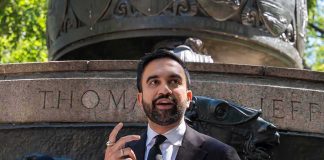
- Mayor Zohran Mamdani publicly condemned the vandalism and said there was no place for antisemitism in the city.
- The incidents included swastikas on homes, synagogues, a Jewish school, and a memorial plaque.
- Critics used the vandalism and later violence to argue that Mamdani’s approach had not protected Jewish New Yorkers.
What Happened in Queens and Brooklyn
Queens saw a burst of antisemitic vandalism that hit homes, synagogues, and a plaque honoring Kristallnacht survivors. Reporting said New York Police Department officials received multiple complaints and opened a hate-crime review after swastikas appeared in several places. In Brooklyn, a Jewish day school was also defaced with a swastika, adding to the sense that the attacks were spreading across boroughs.
The details mattered because they were not vague online arguments. They were visible acts of hate, spray-painted in public and aimed at Jewish spaces. That is why the story moved so fast from local outrage to citywide alarm. Once the vandalism became public, it was impossible for City Hall to treat it as background noise.
Mamdani’s Public Response
Mamdani responded forcefully and repeatedly. He called the yeshiva vandalism “a disgusting and heartbreaking act of antisemitism” and promised to stand with Jewish neighbors against hate. He also said he was “horrified and angered” by the swastikas painted on homes and synagogues in Queens. In later reporting, he again said there was “no tolerance for antisemitism” in New York City.
That response blunted any easy claim that he ignored the incidents. But it did not end the political fight. Critics argued that public condemnation was not the same as prevention. They pointed to the steady drumbeat of antisemitic incidents and said the city still looked exposed, especially when hate showed up in broad daylight and in neighborhoods where Jewish families felt directly targeted.
Why the Story Spread Beyond One Vandalism Case
The larger dispute was never only about spray paint. It was about fear, trust, and whether the city’s leaders could keep Jewish residents safe while debates over Israel and antisemitism grew sharper. That tension showed up in protests outside synagogues, questions about executive orders tied to antisemitism and boycotting Israel, and public criticism from Jewish leaders and outside groups.
That is also why the story stayed combustible after the vandalism itself faded from the front page. When people already believe their government is not serious enough, each new incident lands harder. Supporters of Mamdani say he condemned the hate and backed the police response. Critics say the pattern of incidents showed a city drifting in the wrong direction before the damage was fully understood.
The Violence That Followed Made the Debate Sharper
Days after the vandalism reporting, a Jewish man was among the victims in a Manhattan stabbing case that police later treated as a hate crime. That attack pushed the argument into even more urgent territory, because it gave critics a new example of Jewish New Yorkers being hurt in a city already rattled by antisemitic incidents. It also intensified the idea that rhetoric and safety could not be separated so easily.
Still, the strongest factual line is simple. The vandalism was real, public, and hateful. Mamdani condemned it. The political fight began because many New Yorkers saw the incidents as proof of a deeper problem, while others saw them as crimes that City Hall was already denouncing and investigating. In a city as tense as New York, both truths can sit in the same room and still argue with each other.
Sources:
redstate.com, cbsnews.com, newsweek.com, thehill.com, jta.org, foxnews.com, x.com, abcnews4.com, forward.com, mediaite.com, audacy.com, jewishinsider.com, timesofisrael.com, nypost.com, nytimes.com, politico.com, cnn.com