Washington just froze Microsoft’s green-card pipeline and said the company laid off Americans while seeking thousands of foreign-worker slots—an action with teeth, not talk.
Story Snapshot
- White House said Microsoft is suspended from the labor-certification step for green cards.
- Vice President JD Vance tied the move to active federal probes into fraud and abuse.
- Officials linked layoffs of 6,000 Americans to overlapping PERM job categories.
- Microsoft and several large IT firms face the same freeze as investigations proceed.
The Enforcement Move And What It Blocks
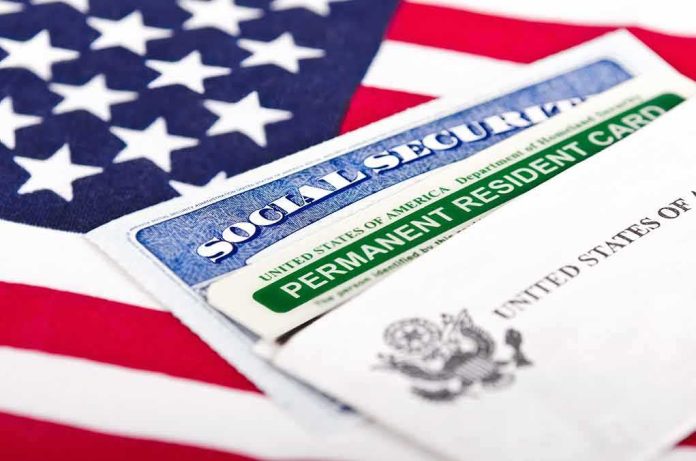
The administration said the Department of Labor will not accept new permanent labor certification filings from Microsoft and will halt processing of pending cases. That step, known as Program Electronic Review Management, is how employers show no qualified U.S. worker is available before sponsoring most employment-based green cards. Cutting off that gateway stalls permanent hires who depend on employer sponsorship, and it signals regulators believe the risk is serious enough to press pause now.
Vice President JD Vance said the suspension follows multiple active federal investigations into alleged abuse tied to the green-card process and the H-1B program. He argued Microsoft laid off 6,000 American workers while also benefiting from about 6,300 H-1B approvals and nearly 3,000 green cards in the relevant period. He also pointed to thousands of PERM applications, with a reported subset overlapping with jobs held by laid-off Americans, sharpening the claim of displacement.
Why PERM Is The Pressure Point
Permanent labor certification is not a formality; it is the legal test of the labor market. Employers must recruit in good faith and prove there is no qualified, able, and available U.S. worker for the job. Only then can they file the immigrant petition to sponsor permanent residence. If an employer uses this channel while shrinking similar roles, the facts can trigger audits, denials, or—as here—suspensions while investigators sort out whether the company honored the law’s “hire Americans first” standard.
The White House did not isolate Microsoft alone. Adobe and major outsourcing firms also face the same freeze, which suggests a broader fact pattern across information technology employers, not a one-off spat. That wider scope matters for leverage. If several big players face a blocked pipeline at once, the incentive to cooperate and produce clean internal records rises. It also pressures boards to align immigration filings with real job needs and domestic hiring.
The Numbers, The Claims, And The Gaps
The headline numbers—6,000 layoffs, 6,300 H-1B approvals, and almost 3,000 green cards—come from public statements and reporting, not from an audit file in the public domain. That makes them fair political markers, but not adjudicated facts. Microsoft maintains its staffing decisions reflect business needs, not visa status, and has said so on the record this year in related coverage. The enforcement action is not a conviction; it is a stop sign while investigators test what happened inside the company.
Microsoft’s historic view also frames its defense. The company has long said most U.S. hires are Americans and that foreign workers fill skills gaps when no domestic candidate is available. That claim matches the law’s design, which expects employers to try to hire U.S. workers first. The Justice Department’s 2021 settlement with Microsoft, in a different hiring area, required process fixes to avoid document-related discrimination against non-citizens. That shows prior compliance issues but does not answer today’s displacement claims.
What Comes Next For Workers, Firms, And Washington
Workers now face two clocks. Laid-off Americans want openings posted in good faith, with real interviews and real offers. Sponsored employees worry about stalled green-card timelines if their cases depend on new or pending labor certifications. The administration appears willing to accept that tradeoff to police the border between skills-based immigration and wage arbitrage. That stance fits a conservative reading of the law: immigration should fill true gaps, not cushion payroll cuts.
𝐌𝐢𝐜𝐫𝐨𝐬𝐨𝐟𝐭, 𝐈𝐧𝐟𝐨𝐬𝐲𝐬 𝐀𝐦𝐨𝐧𝐠 𝐈𝐓 𝐅𝐢𝐫𝐦𝐬 𝐇𝐢𝐭 𝐛𝐲 𝐍𝐞𝐰 𝐔𝐒 𝐆𝐫𝐞𝐞𝐧 𝐂𝐚𝐫𝐝 𝐒𝐮𝐬𝐩𝐞𝐧𝐬𝐢𝐨𝐧
The US has suspended Microsoft, Infosys, Wipro, HCL, Cognizant and other major IT companies from the PERM green card program, citing alleged fraud and… pic.twitter.com/4FV5loRhUk
— Analytics Insight (@analyticsinme) October 8, 2026
Expect document requests, subpoena fights, and pressure on human resources and immigration teams to match requisitions to real roles. The key test is simple to state and hard to fake: if a company cuts Americans in a field or location, it should not claim no American is available for near-identical roles. If investigators confirm overlap at scale, the suspension could harden into fines, bars, or referrals. If not, filings may resume with stricter guardrails—and a public reminder that trust must be earned.
Sources:
youtube.com, etnownews.com, indiatoday.in, newsquawk.com, nypost.com, bhaskarenglish.in, mercurynews.com, dailysignal.com, justice.gov