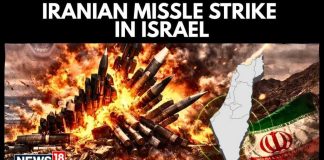

The month-long aerial bombardment of Iran has accomplished what no previous American military campaign could achieve: the death of Supreme Leader Ali Khamenei and the near-total destruction of the Islamic Republic’s navy, yet Tehran continues to strike back with deadly precision, raising questions about what victory actually looks like in this new kind of conflict.
Story Snapshot
- Operation Epic Fury began February 28, 2026, with coordinated US-Israel strikes killing Khamenei and targeting Iranian military infrastructure across 900+ missions
- Despite claims of Iranian military “neutralization” on March 26, Iran struck Prince Sultan Air Base the next day, injuring 15 US troops and damaging critical refueling aircraft
- Over 2,000 casualties reported across Iran, Lebanon, and Israel, with civilian infrastructure including schools and desalination plants hit in the crossfire
- No confirmed Pentagon ground operations are underway as of day 30, contrary to speculation; US strategy remains focused on sustained air and naval dominance
- The conflict threatens global oil supplies through Strait of Hormuz tensions while Iran-backed proxies expand attacks across Iraq and the region
The Decapitation Strike That Changed Everything
At 9:45 a.m. Iranian time on February 28, American and Israeli warplanes executed what military planners had rehearsed for years: a coordinated strike on Iran’s Supreme Leader during the opening hours of Ramadan. Ali Khamenei died in the initial bombardment of his palace compound, along with key Islamic Revolutionary Guard Corps commanders. President Trump had issued the order from Air Force One just 24 hours earlier, timing the attack to coincide with nuclear negotiations and Iran’s holiest month. The gambit worked tactically but opened a Pandora’s box strategically, transforming what some hoped would be a quick regime change operation into a grinding month-long war of attrition with no clear endpoint.
Air Superiority Meets Persian Resilience
Defense Secretary Pete Hegseth’s March 5 assessment captured American confidence: the United States controls the timeline, dominates Iranian airspace, and systematically degrades missile production and space capabilities. Three carrier strike groups now patrol regional waters, backed by B-1 and B-52 bombers operating from RAF Fairford in the United Kingdom. The Iranian navy sits at the bottom of the Persian Gulf, deemed “combat ineffective” by Pentagon assessments. Israel contributed over 1,200 bombs in the first 24 hours alone, hitting IRGC bases, air defense systems, and leadership bunkers. Yet Iran’s March 27 strike on Prince Sultan Air Base, coming just one day after Trump and Hegseth announced Iran’s military neutralization, exposed the limits of air power alone.
The Proxy War Dimension Expands
Hezbollah avenged Khamenei’s death within 72 hours, launching coordinated attacks that evolved into a sustained campaign. On March 7, Iranian-backed militias struck Port Shuaiba with drones, killing six American servicemembers whose bodies were returned home amid somber ceremonies. The Popular Mobilization Forces in Iraq intensified operations, forcing Prime Minister al-Sudani to summon the US ambassador after American strikes on Habbaniya killed seven Iraqi soldiers. Iranian President Pezeshkian halted direct strikes on neighboring countries from March 7 forward unless provoked, but conditioned any ceasefire on Lebanon-related demands Washington refuses to meet. This proxy dimension transforms a bilateral US-Iran confrontation into a regional conflagration with tentacles reaching from Baghdad to Beirut.
Humanitarian Costs Mount Across Borders
The death toll exceeds 2,000 across Iran, Lebanon, and Israel, with civilian casualties mounting despite precision-strike rhetoric. A school in Minab became a symbol of collateral damage when 170 died in an attack on what intelligence suggested was a weapons cache. Strikes on desalination plants threaten water supplies for millions of Iranians, raising concerns about long-term civilian survival even if the regime falls. Thousands of travelers remain stranded as commercial aviation avoids regional airspace. Reza Pahlavi, the exiled opposition figure, urged American planners to spare civilian infrastructure needed for post-regime reconstruction, acknowledging what military strategists sometimes forget: wars end, but populations remain. The economic shockwaves ripple globally through oil markets as Iran threatens Strait of Hormuz closures.
The Ground Operations That Aren’t Happening
Speculation about imminent Pentagon ground operations lacks factual foundation in available military reporting as of day 30. The American force posture remains overwhelmingly naval and aerial, with over 30 ships concentrated in regional waters and no amphibious assault preparations visible in open-source intelligence. Defense Secretary Hegseth’s public statements emphasize sustaining the current air campaign indefinitely rather than transitioning to boots-on-the-ground invasion. The Iraq 2003 model, with its massive ground troop deployments and occupation forces, finds no parallel in current operations. American military leadership learned costly lessons about Middle Eastern ground wars over two decades, lessons that apparently inform current restraint despite overwhelming conventional superiority that could support a land invasion if ordered.
What Victory Looks Like Remains Undefined
The fundamental question haunting Operation Epic Fury is what comes after air superiority. Khamenei is dead, the Iranian navy destroyed, IRGC leadership decimated, and missile production disrupted, yet Tehran continues fighting with asymmetric tools that airstrikes cannot eliminate. Iran’s March 27 base attack demonstrated that degraded capabilities differ from defeated capabilities. Trump’s mid-March ultimatum threatening power plant strikes was quietly postponed, suggesting recognition that escalation has limits. Iranian officials reject negotiations while promising infrastructure retaliation and Hormuz disruptions that could crater global energy markets. The 50-year shadow war between America and Iran’s theocratic regime reaches its violent climax, but climaxes do not guarantee conclusions, only new chapters written in blood and miscalculation.
Sources:
War US-Israel vs Iran Timeline 2026
Iran’s 50-Year War on America: A Timeline of Terror