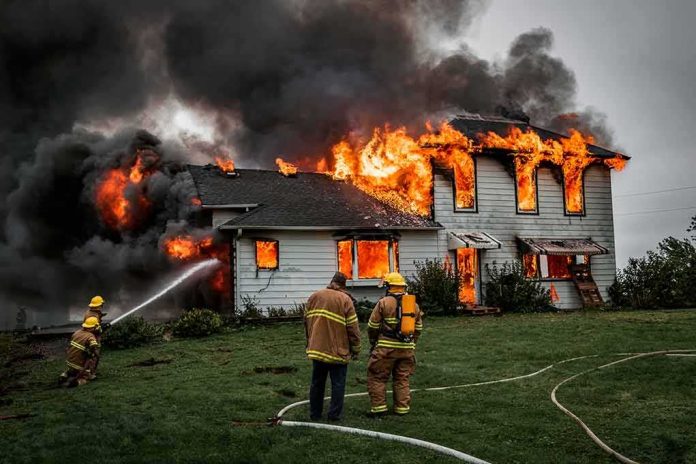
British Columbia moved from warning to emergency as a fast-growing wildfire surge forced more than 20,000 people to leave their homes and pushed the province into extraordinary powers.
Quick Take
- The province declared a province-wide state of emergency because wildfire activity was spreading fast across British Columbia.
- More than 20,000 people fled, with the evacuation total reported differently by several outlets as the situation changed.
- The Bald Range wildfire grew with striking speed and reached more than 100 square kilometers within hours.
- Officials said the emergency declaration gave the province added authority to manage travel and shelter evacuees.
A Province Under Pressure
British Columbia declared a province-wide state of emergency after wildfires forced mass evacuations and overwhelmed local response systems. Premier David Eby announced the move as more than 100 fires burned across the province, many of them out of control in hot, windy, and dry conditions.
The declaration was not just symbolic. The province said the emergency would help officials protect residents, restrict travel if needed, and secure accommodations for evacuees who might otherwise have nowhere to stay. EmergencyInfoBC also posted active wildfire guidance, evacuation instructions, and emergency support contacts for people leaving affected areas.
How Fast the Fire Spread
The Bald Range wildfire became the clearest sign of how quickly the crisis was unfolding. According to The Associated Press, the fire first reported on Friday evening expanded to more than 100 square kilometers and raced about 15 kilometers toward Okanagan Lake within hours.
That speed mattered because it changed the entire shape of the response. Instead of a local fire problem, officials faced a moving regional emergency with homes at risk, roads under pressure, and aircraft used to rescue people as conditions worsened. CBC also reported that people under evacuation order jumped sharply in a short period, showing how quickly the danger was spreading.
The Evacuation Count Kept Changing
The headline number settled in the public mind was more than 20,000 people fleeing, but the exact total varied by source. The Associated Press used that figure, while CBC reported roughly 21,700 people displaced and another 9,700 under evacuation alert. Those differences do not change the core fact: this was a large and rapidly growing evacuation.
That kind of number drift is common in wildfire reporting because alerts, orders, and actual departures do not always line up neatly. One source may count people under evacuation order, another may add those on alert, and a third may track those already displaced from home. The result is a moving target, especially when a fire is still active and official assessments are changing hour by hour.
Why Officials Treated It as an Emergency
Officials described the fire environment in blunt terms. CBC quoted wildfire officials calling the conditions “explosive and extremely dangerous,” and the province said the emergency powers were needed to help protect communities and manage the response. That language fits a broader pattern in British Columbia’s wildfire history, where extraordinary declarations usually follow broad, fast-moving fire seasons rather than isolated blazes.
The provincial record later described this period as one of the longest state-of-emergency stretches in British Columbia history, which underlines how serious the fire season had become. Public updates from the province also showed the wider pressure surrounding the declaration, including many active fires, open burning bans across much of the province, and ongoing evacuation support operations.
British Columbia declares state of emergency over wildfires as roughly 20,000 evacuate https://t.co/7YWZtbS6rh via @JustTheNews
— DSP (@DonnaPence5) August 9, 2026
Even with the strong public record, a few details remained unsettled at the time of the declaration. Damage totals were still incomplete, and officials said they could not fully assess loss because crews were working in an active fire zone. That uncertainty is normal in a fast-burning disaster, but it also means the first wave of headlines often captures urgency better than final damage counts.
What the Declaration Really Changed
For evacuees, the key issue was not the legal language. It was whether the province could move fast enough to get people out, house them, and keep roads and services clear. The state of emergency gave officials broader tools, and the province’s own emergency site directed displaced residents to register for emergency support, avoid returning too soon, and follow local orders.
British Columbia’s wildfire season had already been building before this declaration. Provincial updates in late July and early August showed dozens of active blazes and a growing list of properties under order or alert. By the time the emergency was declared, the province was no longer managing a single fire. It was managing a cascading crisis.
Sources:
youtube.com, abcnews.com, emergencyinfobc.gov.bc.ca, cbc.ca, facebook.com, www2.gov.bc.ca, vancouver.citynews.ca