

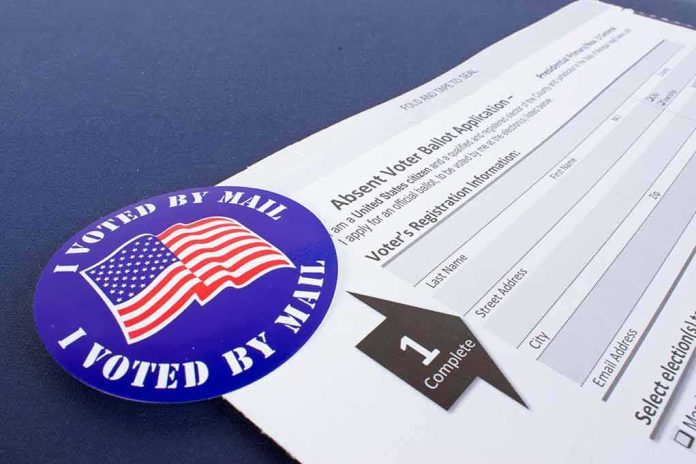
Deployed Americans still lose votes to the calendar, not to choice.
Story Snapshot
- Missed deadlines remain the top reason military and overseas ballots get rejected.
- Late requests sharply raise rejection risk; early action cuts it in half or more.
- Service members face form rejections and confusing, shifting state rules.
- Backup ballots and 45-day mailing rules help but do not fix timing gaps.
The hard numbers that reveal a timing trap
Federal election records show a long pattern of ballots rejected because they arrived too late, including tens of thousands in past cycles, with missed deadlines as the leading cause. Current Defense Department research adds a sharper point. When voters request ballots at least 30 days out, rejection rates stay low. Requests inside the final two weeks more than triple the odds of rejection. Among returned ballots, the most common failure points are missed deadlines and signature issues.
Uniformed-service voters also hit a front-end wall. The Federal Voting Assistance Program reports that their Federal Post Card Application, which registers and requests a ballot, gets rejected more often than for overseas civilians. Almost one in four of those rejections happens because the application landed after the state’s request deadline. That is before the ballot even ships. Many troops then ask for help on deadlines, legal residence, and how to complete forms, which signals deep confusion in the process itself.
Why safeguards still leave gaps
Federal law requires election offices to send requested absentee ballots at least 45 days before Election Day. The Federal Write-In Absentee Ballot exists as a backup when the normal ballot will not arrive in time. Both tools matter, and they save votes. Yet state-by-state rules remain a maze. Fewer than half of states even require timely processing of the Federal Post Card Application by statute, and some states reject a ballot unless it is the federal write-in form in certain crunch cases.
Those design choices create gray zones where a busy Voting Assistance Officer, a rotating duty station, or a weak internet connection can sink a ballot. None of this means election officials act unlawfully. It does mean timing risk stacks up fast when a state deadline collides with a mail delay, a printer jam, or a signature question. The Defense Department itself frames the main problem as transmission and return, not voter intent. The clock, the route, and the rules do the damage.
What the low aggregate rate hides
Officials often point to a small overall rejection share among returned ballots. The latest figure, about 1.8 percent, sounds minor at first glance. That average masks two facts that matter. First, late requests multiply risk, and that late cohort is not small during high-tempo deployments. Second, aggregate rates blend military and overseas civilians, and conditions in a war zone do not match life in Paris. Averages hide spikes, and spikes decide close margins.
The participation gap tells a similar story. Only about one in nine eligible overseas voters returned a ballot in 2024, compared with roughly three in four domestic voters. The Federal Voting Assistance Program calls this an “obstacle gap,” driven by real or perceived barriers like unclear steps, address rules, and mailing delays. No one should confuse a gap with proof of wrongful rejection. But common sense says a system that loses people in the steps needs simpler steps.
Fix the friction where it actually happens
Three changes would honor service and tighten integrity at the same time. First, lock in faster front-end processing. States should require same-day or next-day processing for the Federal Post Card Application during the final 45 days. That matches the spirit of the federal 45-day mailing rule and cuts dead time that helps no one. Second, expand secure electronic return where law allows, with strict identity checks, to beat unreliable routes from austere posts.
Third, treat the Federal Write-In Absentee Ballot like a standing safety net, not a panic button. Commanders and Voting Assistance Officers should push it at the 30-day mark by default and confirm receipt. That step fits federal guidance and turns a backup into a habit that saves votes in crunch windows. None of this undermines state authority. The Supreme Court has said states control receipt deadlines. This plan respects that while removing preventable timing loss before the deadline bites.
What to watch next
State-level data will tell us where reforms land. Leaders should publish military-specific rejection reasons, not just the broader overseas category. Counties should release time stamps from request to mailing to receipt. If a lane jams between a forward operating base and a county office, the records will show it. When numbers move, trust moves. That is practical accountability, not politics.
Sources:
militarytimes.com, eac.gov, fvap.gov