
One late announcement from Donald Trump claims the United States teamed up with Venezuela to blow away a brutal gang boss on his home turf—and almost every detail people care about is still wrapped in fog.
Story Snapshot
- Trump says a U.S. Southern Command strike killed Tren de Aragua leader Héctor “Niño Guerrero” Flores in Venezuela.
- The strike was described as a “swift and lethal kinetic” hit, allegedly coordinated with Venezuela’s government.
- Media outlets repeated the claim fast, but hard proof, forensic evidence, and full details remain thin.
- The story exposes how high‑stakes security claims can race ahead of confirmation in a charged election season.
Trump’s dramatic claim about a lethal strike in Venezuela
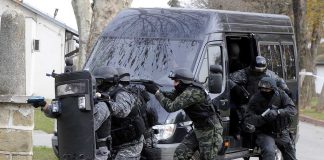
Donald Trump told the country that American forces reached into Venezuela and took out Héctor Rusthenford Guerrero Flores, better known as “Niño Guerrero,” the feared leader of the Tren de Aragua gang.[2] He said U.S. Southern Command carried out a “swift and lethal kinetic strike” on a gang compound, and that the mission “successfully execute[d]” the target.[5] The message was clear: a dangerous foreign gang boss who helped export chaos to American streets was now dead.
Trump also added a twist that made news anchors raise their eyebrows. He said this American strike was done “with the close coordination of our friends in Venezuela, with whom we are working very well.”[1] That line clashed with years of open hostility between Washington and Caracas. Yet cable banners still flashed “BREAKING” as networks repeated that the United States had killed the “infamous leader” of Tren de Aragua in a joint effort with Venezuela’s government.[5]
The gang behind a wave of fear in the Americas
Tren de Aragua is not some small local crew. Reports describe it as a sprawling Venezuelan criminal network involved in drug trafficking, extortion, and human smuggling across Latin America.[2] The United States has labeled the group a foreign terrorist organization, placing it in the same legal bucket as major terror outfits.[2] Trump and his allies have linked the gang to crimes inside the United States and used it as a symbol of what happens when borders fail and cartels slip through.
Flores, under the nickname “Niño Guerrero,” has long been identified in reporting as the group’s top boss. His story fits a pattern we have seen with cartel leaders in Mexico and beyond: a prison-hardened commander who ran operations even from behind bars. For many Americans who watched grim headlines about migrant caravans and cross‑border crime, hearing that the U.S. military had finally dropped a hammer on this man carried instant emotional punch.
What we know—and do not know—about the operation itself
Here is where the picture turns hazy. Trump’s statement gave no exact date for the strike, only that it happened “earlier this week.”[1] Reports say the hit took place at a Tren de Aragua compound somewhere in Venezuela, but no coordinates or town name were made public.[1] That matters. When a drone strike takes out a figure like this, militaries usually log exact locations, blast estimates, and visuals. None of that was shared in detail.
Media outlets said Trump posted a short video clip on his social platform that showed a building being hit, calling it newly declassified footage from U.S. Southern Command.[5] Viewers saw an explosion. They did not see time stamps, metadata, or independent analysis that proved the clip was that specific strike. Without those details, you are left trusting the label attached by the same politician who benefits from the story landing hard in the news cycle.
The Venezuela cooperation claim that bends belief
The boldest part of Trump’s account may be the least tested: that Venezuela’s socialist government worked hand‑in‑hand with U.S. forces to kill a criminal asset on its own soil. For two decades, Washington and Caracas have traded sanctions, insults, and accusations. Even the press that repeated Trump’s words called it a “rare instance” or pointed to the “historically adversarial relationship” between the two governments.[1]
Breaking: Pres. Trump Shares Video of US 'Lethal Kinetic Strike' Killing Head of Tren de Aragua https://t.co/LbbwuEg1af
— Manhattan pleasant ave. (@Bisons119) June 13, 2026
One report citing Venezuela’s Information Ministry said officials described Guerrero as “neutralized” during clashes with criminal groups, which could match the U.S. version if the two sides coordinated quietly.[3] But the Venezuelan Embassy in Washington offered no comment when asked, and there has been no detailed joint statement laying out who did what, when, and where.[1] That silence leaves a wide opening for both suspicion and spin, depending on your politics.
Missing proof, political stakes, and the conservative lens
For all the tough talk, key proof remains offstage. No one has shown forensic identification of a body. There are no public photos, no DNA match, no chain‑of‑custody trail that confirms the dead man is actually Héctor Guerrero Flores.[1] Even his name drifts across reports—Héctor Guerrero, Hector Flores, Héctor Rusthenford Guerrero Flores, “Niño Guerrero.”[2] That kind of sloppiness is not unusual in fast reporting, but it gives critics easy grounds to question what really happened.
From a conservative, law‑and‑order view, a president using the military to hunt a foreign gang leader fits core priorities: secure borders, crush transnational crime, and stand up for American victims. Trump tied the strike to specific murdered Americans, framing it as overdue justice. That resonates with millions of voters who watch their towns change and wonder who is steering the ship. But those same voters also value truth, accountability, and a military that does not become a campaign prop.
How to separate justice from theater
This story will only be truly settled with hard documentation: strike logs from U.S. Southern Command, battle damage assessments, and forensic reports from the scene. Until then, what we have is a vivid claim from a president, amplified by major outlets, thinly backed by a brief Venezuelan line about a “neutralized” criminal, and wrapped in the emotional power of revenge for crimes committed on U.S. soil.[3] The risk is simple: when governments ask citizens to “just trust us,” they must eventually show their work.
Sources:
[1] Web – Trump Says US Military Strike Killed Leader of Tren de Aragua Gang …
[2] YouTube – Leader of Venezuelan gang Tren de Aragua killed in US …
[3] YouTube – Trump says US military strike killed leader of Tren de Aragua gang
[5] YouTube – Trump says US military strike killed leader of Tren de Aragua gang …