

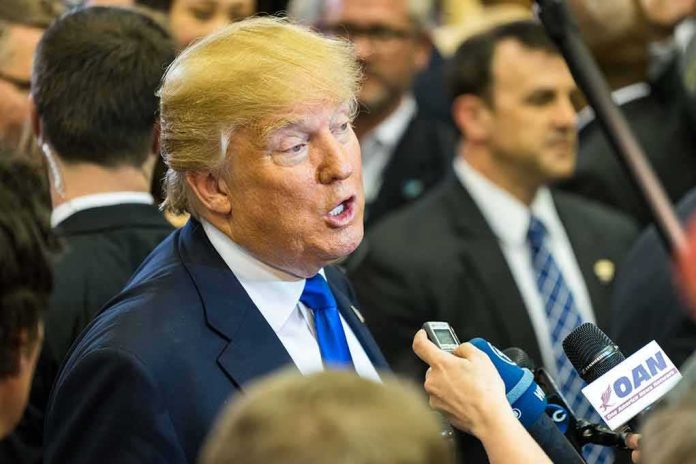
President Trump blasted Fox News reporter Jacqui Heinrich and warned her fiancé, Representative Brian Fitzpatrick, after questions he called rooted in bad reporting.
Story Snapshot
- Trump said Heinrich’s weekend reporting was “absolutely terrible” and accused her of soft-pedaling a Democrat guest.
- He told Heinrich that Fitzpatrick “likes voting against Trump,” adding that “it doesn’t work out well” for such Republicans.
- The clash reflects Trump’s long-running fight with media figures he says push false frames.
- Fox News lists Heinrich as its senior White House correspondent.
Trump’s On-Camera Flashpoint and the Personal Swipe
President Trump fielded questions from reporters when Jacqui Heinrich asked about a call with Israel’s prime minister. He skipped the topic and turned to her fiancé, Representative Brian Fitzpatrick of Pennsylvania, saying he “likes voting against Trump,” and that such habits “don’t work out well” for Republicans who cross him. The line landed hard because it merged policy loyalty with a personal tie. Supporters saw a reality check. Critics heard a threat wrapped as campaign hardball.
The episode followed a weekend of Trump griping about Heinrich’s on-air performance. He posted that she was “absolutely terrible” and should be at another network. He argued she failed to push back on a Democratic lawmaker he called deceptive, and that soft handling misleads viewers and damages trust. His message was simple: bad premises yield bad questions. He framed his answer as a rejection of what he sees as a rigged media script.
Why Trump Says The Questions Were “Fake”
Trump’s case hinges on the claim that some reporters frame questions to smuggle in a verdict. He says Heinrich did that by echoing talking points without testing them. He believes the press must challenge power on both sides with equal force. When that does not happen, he labels it “fake news.” That label is blunt and broad, but it reflects a view many conservatives share: bias is not just slant, it is omission that hides key facts and context.
Fox News lists Heinrich as senior White House correspondent, which puts her at the center of daily fights over facts, words, and timing. White House beats reward speed. Speed invites error and shallow frames. Trump’s critique insists that reporters slow down and press harder, especially when a guest slips claims into the record. The logic aligns with common sense: if a premise is wrong, the answer misleads. A tough follow-up protects the audience more than a fast pivot does.
The Fitzpatrick Factor: Policy Loyalty Meets Media Accountability
Fitzpatrick is a Republican with a moderate brand. Trump has grown less patient with Republicans who break with him on major votes. He told Heinrich that her fiancé votes against him and warned that pattern ends badly for such lawmakers. Some call that intimidation. Others call it normal party discipline. The message to voters is clearer than the tone: if you run on the team’s banner, you should not attack the team’s core goals once in office.
“It’s terrible. Remember that picture. That’s going to be us in three years if the wrong side gets in,” Trump told Fox News’s Jacqui Heinrich on Friday. “If the Democrats get in, you will not live a very good life.”👀 https://t.co/GMvMf8qVnA
— DeAnna Calderón (@DCinTejas) August 2, 2026
Linking a reporter to a lawmaker’s record crosses streams that many journalists guard. That move invites charges of personalizing the press. Yet Trump’s supporters argue that conflicts of interest, or even the appearance of them, deserve sunlight. The clean fix is disclosure. If a reporter’s ties could shape coverage, say so, then do the job with scrupulous balance. That standard honors transparency without granting politicians a veto over who asks tough questions.
The Broader Pattern: Press Fights, Populist Style
Trump’s media fights fit a larger struggle over who sets the frame. Populists do not just dispute facts; they dispute the referee. They argue that old gatekeepers lost the public’s trust. Recent research shows a rising tolerance for sharp attacks on the press by political leaders, and a worsening press-freedom climate measured by international groups. Those data points do not judge any single exchange, but they explain why each clash draws such heat and attention.
How To Judge The Exchange On The Merits
Two tests help. First, did the question rest on a disputed claim that needed proof? If yes, the reporter should show that proof or sharpen the ask. Second, did the answer add verifiable facts or only attack motives? On the first test, Trump alleges Heinrich’s premises were weak. On the second, his personal jab at Fitzpatrick signaled power more than substance. The conservative sweet spot is firmer questions and answers, minus the personal drama that fogs the policy stakes.
What Comes Next
Fox News can back its reporter and refine its booking and follow-up discipline. The White House can keep pressing its case, but swap personal digs for concrete receipts. Voters can reward outlets and leaders who anchor claims in clear facts and open data. That is the only path that lowers the temperature while raising the signal. If both sides do that, the public gets fewer viral clips and more truth—exactly what a country in serious times needs.
Sources:
thehill.com, newsweek.com, youtube.com, breitbart.com, facebook.com, phys.org, rsf.org