
Missile launchers near Mar-a-Lago sent a clear message: presidential protection just went from expensive to extraordinary.
At a Glance
- The government spent about $13.6 million on four Mar-a-Lago trips in early 2017, mainly for aircraft, boats, and personnel support.
- Defense and Homeland Security shared those costs, showing a broad federal security footprint.
- Ground-based air defenses have since appeared near the resort, but officials have not tied them to a specific public threat.
- Required cost reports to Congress were spotty, raising transparency concerns that still matter now.
What We Know: Big Protection Comes With Big Machinery
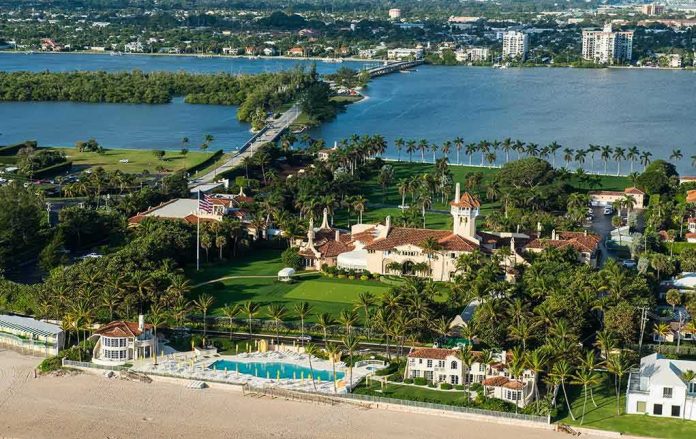
The Government Accountability Office reported that four presidential trips to Mar-a-Lago from February 3 through March 5, 2017 cost about $13.6 million in federal funds. Most of that total came from operating government aircraft and boats, with the rest covering travel, lodging, meals, and other support for protective teams. The price tag shows what it takes to secure a seaside venue cut by roads, waterways, and public access. You do not guard a president with a handful of agents and a rope line.
https://www.youtube.com/watch?v=uSAngAkkbyc
The Department of Defense and the Department of Homeland Security shared the load on those trips, revealing how many parts move when a president leaves Washington. The military flew aircraft and sailed patrol boats. The Secret Service moved agents, brought gear, and staged command posts. Agents also booked rooms near the president to build a secure perimeter and maintain constant coverage, according to contemporaneous reporting. The scale makes sense for the job, but it also multiplies bills fast.
Missile Defenses Appear, But The Public Rationale Stays Sealed
Recent reporting shows ground-based air-defense systems positioned in the Palm Beach area to protect Mar-a-Lago, at the request of the Secret Service. Officials did not publicly identify the system, the date of arrival, the number of launchers, or the specific threat that drove the decision. They also did not say how long the deployment would last. That silence is normal for sensitive operations, but it leaves taxpayers guessing where prudence ends and excess begins.
The $13.6 million figure from 2017 does not describe the cost of these missile defenses, and it should not be used that way. The audit focused on four trips and excluded classified expenses and regular salaries. That means the true cost of presidential protection at Mar-a-Lago has always been higher than the headline numbers. The missile deployment adds another layer. Without official detail, any attempt to combine those costs is more talk than math.
Security Logic Versus Public Scrutiny
Federal law treats protection of the president as a core duty, wherever he is. That includes private property. The Government Accountability Office found that agencies required to submit semiannual protection-cost reports under federal law often failed to do so; only the Coast Guard complied for several years reviewed. That gap fuels doubts about discipline and value. The fix is simple common sense: if agencies can field missile launchers, they can also file clean, on-time cost reports.
Critics argue that visits to a privately owned resort create an optics problem because some protection dollars pass through a property tied to the president. The Government Accountability Office identified tens of thousands of dollars in direct payments during the early trips, a small sum next to the total but a big point in politics. The waste claim rings loud, but the facts point to a harder truth: the mission dictates the footprint. The right answer is transparency and tight controls, not shortcuts on risk.
How To Judge Necessity Without Classified Pages
Americans can ask fair questions without undercutting security. What threat scenario does the defense posture cover? How does it fit with existing restricted airspace, fighter patrols, radar networks, and local law enforcement? What triggers activation and stand-down? Officials will not share play-by-play, and they should not. But they can show Congress costs, timelines, and objectives at a level that guards secrets and respects taxpayers. That is the accountable way to run a vital mission.
What Comes Next: Clarity, Comparisons, and Controls
Congress should compel complete, routine reporting on protection costs across agencies, including unclassified summaries that separate travel support from special defenses like short-range missiles. Auditors should map the Mar-a-Lago footprint to comparable sites and past presidencies to test for consistency. If the same risks exist at other presidential locations, the same tools should appear there too. If not, agencies should explain the difference. That is how you keep security strong and spending honest.
Sources:
military.com, gao.gov, hsgac.senate.gov, staugustine.com