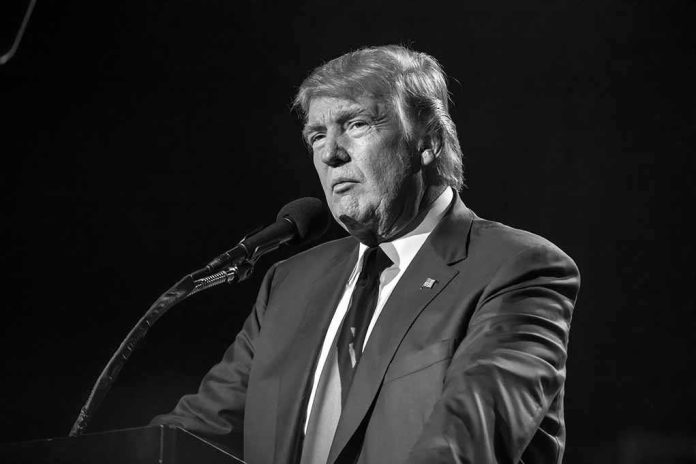
With a divided Congress now locked in gridlock after the midterms, President Trump is set to spend his final two years governing almost entirely through the powers he already holds as commander in chief.
Quick Take
- Analysts say congressional deadlock after the 2026 midterms will push major decisions toward the executive branch, especially on foreign policy.
- President Trump has already used sanctions, naval deployments, and trade pressure to act without waiting on lawmakers.
- A recent Supreme Court case over tariff powers shows real limits still exist on how far a president can go alone.
- History shows Congress sometimes claws back power, as it tried to do with the 1973 War Powers Resolution.
Why The White House Holds The Steering Wheel Now
Foreign policy writers tracking the administration say the midterm results changed little about how Washington actually operates. One defense analysis argued that debates over which party controls Congress are a “red herring” when it comes to national security, because enforcement actions like sanctions and naval interdiction are “driven from the Oval Office, not committee rooms on Capitol Hill”. That reality gives President Trump room to keep moving on Iran, Russia, and Ukraine regardless of who holds the House gavel.
The administration’s approach to Iran shows this pattern clearly. Officials have built what one piece called a strategy of economic containment, combining a naval blockade with layered sanctions meant to squeeze Tehran’s economy without a single new law passed. None of that required fresh legislation. It relied on authorities presidents have used for decades to restrict trade and freeze assets during declared national emergencies.
The Diesel Deal That Reshaped The Russia Calculus
President Trump’s handling of the war in Ukraine offers the clearest example of executive-driven foreign policy in action. In October, he announced Russia would supply nearly five million tons of diesel to American and global markets, and the Treasury Department licensed the trade shortly after. A day later, he said it was time for Ukraine to get a new president and demanded Kyiv stop striking Russian refineries, a shift widely tied to diesel prices climbing above six dollars a gallon before the midterms.
That single decision rippled outward fast. South Korea’s break with Kyiv has been described as serving President Trump’s broader Russia pivot, showing how one presidential call on energy policy can reorder alliances thousands of miles away. No vote was needed. No committee hearing came first. The president simply acted, and the diplomatic map adjusted around him.
Trump’s Negotiating Style Favors Disruption Over Consensus
President Trump’s approach traces back to lessons from his decades in real estate, where he learned that whoever needs a deal less controls the table. He does not negotiate the way career diplomats do, slowly building consensus. He disrupts the starting point first and lets the discomfort do the negotiating, a pattern visible in his approach to Greenland, trade fights, and now the Russia-Ukraine talks.
Real Limits Still Exist On Presidential Power
Executive authority is not unlimited, and a major Supreme Court fight this year proved it. The Court examined whether the International Emergency Economic Powers Act gave President Trump authority to impose sweeping tariffs, with the government arguing the law’s plain text allowed it. Critics countered there is no independent constitutional authority for a president to set tariffs as part of foreign affairs, calling that power “disputedly Congress’s, not the President’s”. The case shows courts still check executive reach even on trade tied to foreign policy.
Congress has pushed back on presidential war powers before, and that history matters here. Lawmakers passed the War Powers Resolution in 1973 specifically to limit a president’s ability to start or escalate military action abroad without their consent. The law passed over a presidential veto, proof that Congress can reassert itself when it decides executive power has grown too large, even if enforcement since then has been inconsistent.
What This Means For The Next Two Years
Expect President Trump to keep leaning on sanctions, naval deployments, trade leverage, and direct diplomacy rather than legislation. That strategy fits a Congress too divided to pass major bills but still capable of fighting the administration in court or through oversight hearings. Conservatives who value a strong executive in foreign affairs should welcome this approach, provided it stays within constitutional bounds the courts and Congress are actively defining in real time.
Sources:
realcleardefense.com, congress.gov, supremecourt.gov