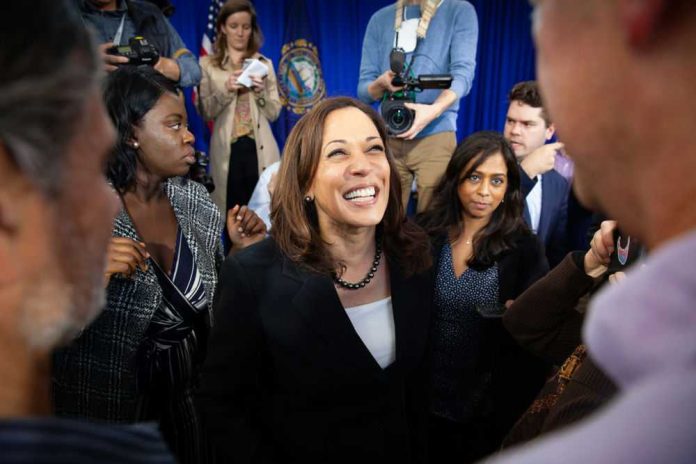
Kamala Harris flew into Detroit to boost Abdul El-Sayed with a laser-focused roundtable on Black maternal health and a blunt pitch about flipping the Senate.
Story Snapshot
- Harris joined El-Sayed in Michigan for a Black maternal health roundtable.
- Both campaigns tied the stop to turning out voters and Senate control.
- Harris had endorsed El-Sayed after his August primary win.
- Michigan’s status as a battleground raised the visit’s stakes.
Harris and El-Sayed align message and mission in Detroit
Harris’s team confirmed she would return to Michigan to help turn out voters and press the case for a Democratic Senate majority. Her spokesperson said the stakes include prices and standing up to President Trump’s corruption, framing the Senate as the vehicle for change. El-Sayed’s team matched that message. They set a specific policy focus for the event: a roundtable on improving Black maternal health and lowering health care costs, not a generic rally.
El-Sayed welcomed Harris as a valued voice in Detroit’s neighborhoods. He said many people there see her as an inspirational leader, which is the point of a surrogate visit—add energy, earn media, and connect policy to people’s daily lives. Research on surrogate visits shows they can move the needle, though effects tend to be modest and depend on fit between messenger and audience. The Detroit stop checked those boxes: local issues, local voters, and a national ally amplifying the cause.
The Senate math and why this stop matters
Michigan sits in the small set of states that could decide Senate control. That map makes every high-profile visit a twofer: mobilize base voters and signal party unity. Harris’s August endorsement gave the effort continuity, not a one-off splash. She said she proudly stood with El-Sayed to win a Senate majority in November, and she tied that goal to everyday costs for Michigan families—housing, gas, groceries, health care, and child care. The Detroit appearance extended that frame into community conversation.
Wire and local reporting placed the event on a specific Tuesday in late September and cast it as part of a final push to unify Democratic voters. The clear schedule and policy brief reduced any fog around what would happen: a joint appearance in Michigan, focused on maternal and infant health disparities in Black communities. The campaigns did not release crowd counts or a full attendee list in advance, which is typical. The purpose was message discipline and turnout, not a raw show of force.
Black maternal health as policy and politics
The choice of Black maternal health fit Harris’s public profile. Coverage described the topic as one she has championed, and El-Sayed echoed that record while citing his own work on health equity. The issue has wide public sympathy and speaks to safety, dignity, and family—values that cut across party lines. Community-centered efforts, including federal public health campaigns that urge providers to listen and respond to mothers’ concerns, have gained traction and reach, underscoring the policy salience of the roundtable focus.
Critics may call any surrogate stop theater, but campaigns use surrogates because they work on the margins where close races are decided. One rigorous analysis found surrogate visits can nudge county-level vote share by a small but real amount when they match message to audience. That is how close contests are often won—one neighborhood, one local issue, one earned-media cycle at a time. When a national figure talks cost of living and safer births with local leaders, the signal is practical, not abstract.
How the Detroit stop fits the larger fight
Democrats framed the visit as a unity moment in a must-win state. The message linked near-term relief on prices to the long game of Senate control. That is common-sense campaign math: without the votes, promises stay promises. The roundtable format added substance and gave El-Sayed an arena to show fluency on health policy while standing with a nationally known partner. The caveat is simple: the stop itself does not prove turnout impact; the votes will. Until then, the record shows a planned, on-message push in Detroit.
Sources:
abcnews.com, detroitnews.com, politico.com, foxnews.com, washingtontimes.com, abdulforsenate.com, blackmamasmatter.org, tcf.org