

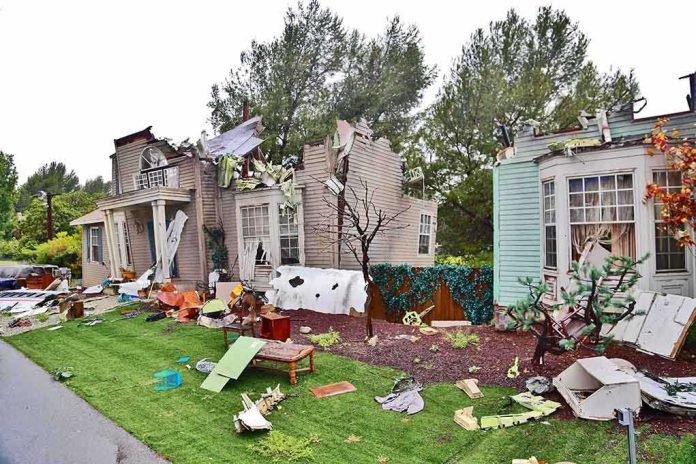
Deputies say Kyrsten Sinema’s former bodyguard ransacked her Arizona home, leaving more than $200,000 in damage and a trail of threats and smashed art.
Story Snapshot
- Deputies arrested Matthew Ammel on September 18 on a felony criminal damage charge.
- Prosecutors say he entered Sinema’s Cave Creek home and destroyed property worth over $200,000.
- Court filings cite messages, recordings, and surveillance footage tying him to the damage.
- Reports describe 22 paintings removed and bottles smashed, including items tossed in a pool.
Prosecutors Detail A Costly Rampage
Maricopa County prosecutors say Matthew Ammel, 39, broke into former Arizona Senator Kyrsten Sinema’s Cave Creek home in late August and caused widespread damage. Deputies booked him on September 18 on a felony criminal damage count after a weeks-long probe. Charging documents and local reports put the loss above $200,000. That figure includes destroyed artwork, bottles of alcohol, and other property deputies cataloged at the scene, according to station and court summaries. The case now moves to pretrial hearings while evidence is processed.
Investigators point to digital and video evidence to support the charges. Court summaries reported by national outlets describe messages and recordings that include threats tied to Sinema’s artwork, plus surveillance footage that places Ammel at the home during the incident window. The timeline cited in those reports spans the end of August into early September, with deputies called after Sinema returned and reported extensive loss. Police statements describe a methodical trashing, not a quick smash-and-grab.
A Relationship That Became Part Of The Case File
Media coverage has focused on the personal history between Sinema and Ammel because Sinema previously acknowledged sleeping with him while he was married and while she was in office, and he worked as her bodyguard. That detail is not the criminal charge, but it shapes why the story traveled fast. Court paperwork summarized by multiple outlets says Ammel allegedly targeted paintings and valuable items, and removed about 22 pieces of art before more property was smashed or tossed into the pool. Deputies say those actions drove the high damage total.
Reports also describe a pressure campaign tied to social media. One outlet cited filings that quote threats to damage paintings at timed intervals unless Sinema posted a video to a platform. That kind of demand, if proven, shows planning and intent. It also aligns with a pattern seen in high-profile disputes where private conflict spills into public channels. Prosecutors often view threats plus follow-through as strong evidence of motive and state of mind. The defense has not presented a public rebuttal in the coverage cited.
How Felony Criminal Damage Works In Practice
Arizona law treats intentional damage that crosses high dollar thresholds as a felony. Prosecutors must show the accused knowingly caused the loss. Police reports and recorded messages can matter more than motive if they tie a person to the act. When art is involved, appraisals and expert statements help set values that drive the charge level. A $200,000 figure places this well above typical property crime and signals a case likely to draw restitution requests and strict release terms if there is a conviction or plea.
Conservative common sense says the facts should rule, not the soap opera. Property rights are a bedrock value. If someone destroys what you own, the system should respond. Prosecutors say they have messages, recordings, and video. That is the kind of evidence juries trust. If the state proves its case, a felony conviction and restitution are warranted. If not, the burden of proof protects the accused. The process exists to keep passion from replacing proof.
Media Frame Versus The Core Facts
The scandal frame will tempt some to make this about sex and status. That is noise. The core is simple: a home was allegedly invaded, and property was destroyed at great cost. The state says it can show who did it and how. A smart reader can separate the tabloid details from the charge. The personal backstory explains attention, not the elements of the crime. Courts rule on evidence, not on headlines or past romances.
What Comes Next
Expect hearings on evidence handling, valuation of the art, and any statements Ammel made. The defense may challenge the chain of custody for video or dispute claimed values. Prosecutors will aim to lock in the timeline and link messages to the acts at the home. If the case goes to trial, jurors will weigh clear questions: Did he enter? Did he destroy property? What is the true value of the loss? Those answers will decide guilt and any restitution.
Sources:
thegatewaypundit.com, rawstory.com, okmagazine.com, ibtimes.co.uk, fox10phoenix.com