

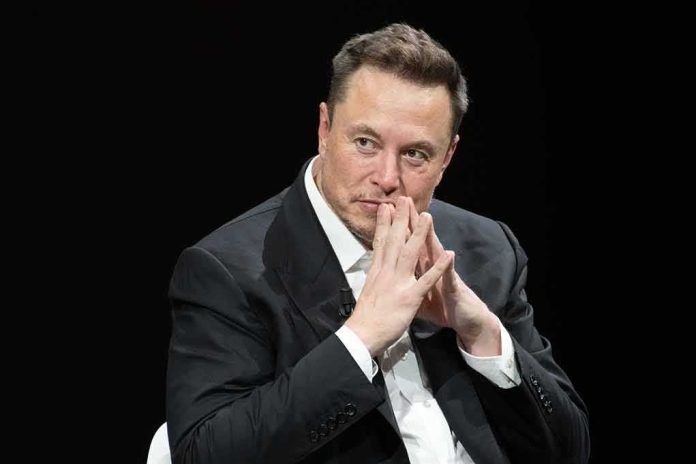
Elon Musk moved at least $276 million into Republican-aligned groups since July, locking in the largest known midterm push of 2026 and resetting the money map overnight.
Story Snapshot
- At least $276 million since July, about $366 million this cycle, to boost Republicans.
- Major gifts flowed to Senate and House super political action committees.
- America PAC, founded by Musk, built a turnout machine across key races.
- Musk’s 2026 outlays likely surpass his 2024 spending by tens of millions.
Musk’s Money Surge And Where It Went
Reuters reported Musk has directed at least $276 million into Republican efforts since July, and roughly $366 million across the 2025–26 cycle. The Senate Leadership Fund received a dominant share, at a reported $158 million, while the Congressional Leadership Fund drew about $20 million. Those groups fund Senate and House battles that decide control of Congress. The gifts drop into a short calendar. Money late in the cycle often buys closing ads, ground staff, and data that drive turnout.
America PAC, which Musk founded, raised more than $76 million and built a turnout operation across contested House and Senate races, according to reporting cited by CNBC. That kind of build is not a vanity project. Turnout systems cost real money: voter files, field teams, regional data leads, and get-out-the-vote centers. Fast money can speed up vendor hiring and scale text, phone, and door programs in days. That compresses the usual months-long ramp into weeks.
How This Compares To 2024 And Why Timing Matters
Reports place Musk’s identified 2025–26 spending at about $366 million, compared with roughly $290 million in the 2024 presidential cycle. That difference matters because midterms lack the free media halo of a presidential race. Dollars must pull more weight to cut through noise. Late-in-cycle cash also lands after weak buys clear and polls harden. That lets committees lock in final-week programming with cleaner audience targets. It is efficient if the data are strong; it is wasteful if the map shifts.
Republican-aligned groups now have a clearer closing budget. The Senate Leadership Fund can load high-frequency ad blocks in tight states and surge field in dense suburbs. The House-focused Congressional Leadership Fund can protect first-term members and press offense in districts with split-ticket voters. These organizations exist to move margins at the edge. A single point across a handful of states or districts can decide Congress.
Why These Committees And What They Actually Do
Super political action committees raise and spend unlimited funds independent of candidates. They cannot coordinate with campaigns, but they can mirror public strategy and fill gaps. The Senate Leadership Fund and Congressional Leadership Fund are built to do that. They bankroll contrast ads, fund research, buy voter data, and stand up pop-up field programs as early votes arrive. Their mission is simple: find likely supporters, push them to vote, and shave the opponent’s base.
Allocations also went to the Republican Governors Association and the Republican Attorneys General Association, and to state-linked efforts such as Lone Star Liberty political action committee, according to various reports summarizing the distribution. That spread shows two aims. First, hold and flip chambers in Washington. Second, build a deeper bench in states that shape policy fights on energy, speech, crime, and border security. For readers who prize limited government and rule of law, that stack aligns with common sense: win where policy is written and enforced.
The Bigger Picture: Megadonors And The Post–Citizens United Era
This cash blast sits inside a larger trend. After the Supreme Court’s Citizens United decision, outside groups became the main highway for big checks, and billionaires from both parties used them to shape races. Analyses this cycle show megadonors leaning Republican, with fourteen of the top twenty donor entities backing Republican-aligned groups, and those top donors accounting for about $1.2 billion during the measured window. That creates an arms race where speed, not just size, sets the edge.
https://twitter.com/TheDogefather5W/status/2109947646383374812
The point of impact will show on two fronts. First, paid media. Expect dense ad rotations in close Senate states and suburban House districts. Second, turnout. America PAC’s build suggests heavy investment in voter contact, especially where low-propensity conservatives live. One fair caveat: reports use terms like “at least” and “roughly,” and not every committee disbursement is public in real time. That does not change the headline fact. Musk is the largest known donor of the 2026 midterms, and Republicans now have fuel for a maximal closing push.
Sources:
thegatewaypundit.com, reuters.com, cnn.com, newsweek.com, au.finance.yahoo.com