

Ohio’s early votes are rising fast in key counties, but the method shift hides who is actually winning.
Story Snapshot
- Early in-person voting surged while mail voting fell in several Ohio counties.
- Hamilton County logged over double early in-person votes versus 2022, with Democrats leading.
- CNN says Democrats make up a larger share of early voters than two years ago, even in Trump areas.
- Experts warn method changes can mask enthusiasm, not prove it.
Early Vote Headlines Collide With Ground Truth
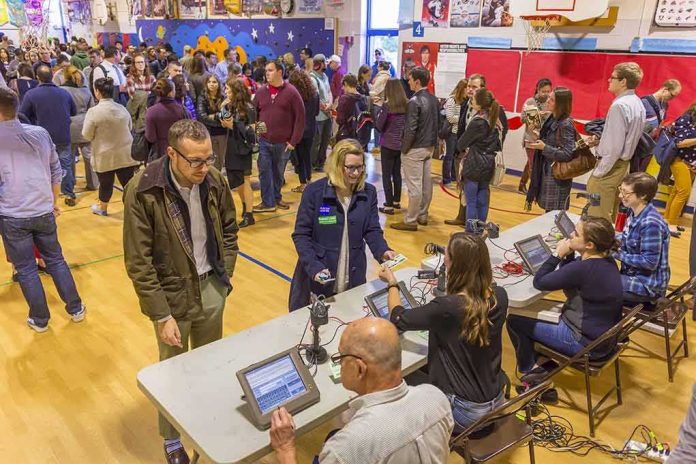
News from Ohio tells two stories at once. Some local data points to Democrats leading the early in-person vote in places like Hamilton County. WLWT reported 9,482 early in-person votes in the first four days, more than two and a half times 2022, with Democrats casting 56 percent of those ballots. At the same time, mail-ballot requests in that county reportedly fell compared with a prior midterm, which can look like erosion. Both can be true when voters switch how they vote, not whether they vote.
CNN pushed a bigger frame: statewide, affiliated Democrats make up a larger share of early voters than two years ago, including in counties that backed President Trump by at least 20 points. The network said the Republican edge in those counties shrank from 30 points in 2024 to five points in 2026, and the early electorate looks about 27 points more Democratic than at the same time in 2024. Those shifts suggest Democrats banked votes earlier. They do not prove Democrats added more net voters.
Method Shift: The Hidden Engine Behind The Numbers
Ohio voters changed how they cast ballots in recent cycles. The New York Times tracker shows absentee and mail share falling from 22 percent in 2022 to 18 percent in 2024, while early in-person rose from 13 percent to 26 percent. That pivot matters. A drop in mail may signal less enthusiasm, or it may only show voters choosing to stand in line early. If Democrats favor early in-person this year, the partisan mix of “early” will skew blue without any new voters joining the pool.
County snapshots mirror that story. Signal Cleveland reported a decline in Hamilton County Democratic mail requests from a prior midterm benchmark, while other outlets highlighted a jump in early in-person turnout across many counties. Cleveland.com found sizable increases in early in-person voting across the state’s counties, reinforcing the swap from mail to in-person. When the lane changes, raw request counts for one lane no longer predict the finish line. Campaigns that read the lanes wrong risk misfires in turnout plans.
Where Enthusiasm Is Real And Where It Is Mirage
Hamilton County’s first days suggest real Democratic energy at early sites. Democrats were a majority of early in-person voters in that four-day window. Medina County, a Republican-leaning area, also recorded more Democrats than Republicans on day one, despite a GOP registration edge. That is notable and deserves weight. Still, single-day or single-county snapshots can flash and fade. High-energy early days can flatten if follow-up contact, absentee chase, and Election Day operations lag.
Forecasts from early vote composition often miss because campaigns adapt. If Republicans focus on Election Day turnout and door-to-door contact, they can erase early deficits. If Democrats continue to front-load ballots, they reduce risk from bad weather or last-minute news but may hit a ceiling sooner. The question is conversion: who turns occasional voters into actual voters. That test rewards ground game discipline more than headline spikes, which aligns with common-sense conservative focus on execution over optics.
What Matters Next For Ohio’s Final Tally
Three markers will decide if early patterns signal a break or a head fake. First, the absentee chase rate and cure rate. Ohio maintained strong absentee performance in recent cycles; a high return and cure rate locks in early advantages. Second, the weekend early-vote surge. Parties that mobilize “souls to the polls” style operations often bank decisive margins. Third, the Election Day field program. Door knocks, ride offers, and poll coverage finish the job or leave votes on the table.
BREAKING: DEMOCRATS FAR OUTPACE REPUBLICANS IN OHIO EARLY VOTING SO FAR!
Democrats Make Up Over Half Of All Early & Absentee Ballots Cast In Ohio As Of October 9th.
About 93,000 People Have Already Voted.
Of Those Ballots Democrats Account For 54.5% Or Nearly 51,000 Votes.… pic.twitter.com/kKXuq8lpCM— John Basham (@JohnBasham) October 13, 2026
Practical guidance for readers follows. Treat mail-request declines with caution when in-person rises. Compare apples to apples within the same method. Watch for late-week updates, which often add thousands of processed ballots at once. Weigh statewide aggregates alongside county-level trend lines. Finally, hold every sweeping claim to the test of turnout math. If one side says the other is fading, the only proof that matters is who shows up with ballots in hand when polls close.
Sources:
thegatewaypundit.com, cnn.com, cleveland.com, reuters.com, nytimes.com, wlwt.com, signalcleveland.org