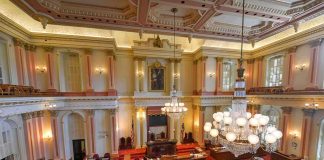

A deadly attack at a San Diego mosque is already being branded a “hate crime,” exposing once again how fast officials and media will lock in a terrorism narrative long before the public ever sees the evidence.
Story Snapshot
- Police and federal agents are treating the San Diego Islamic Center shooting as a hate crime, but key evidence remains hidden from the public.
- Two armed teenagers killed three people, including a heroic security guard, before dying of apparent self-inflicted gunshot wounds nearby.
- Officials cite “hate rhetoric” and alleged anti-Islamic writings, yet the note, firearms markings, and digital trail have not been released.
- The case echoes earlier California attacks on houses of worship and raises hard questions about youth radicalization, mental health, and early media framing.
What We Know About the San Diego Mosque Shooting
San Diego police say two teenagers, ages seventeen and eighteen, opened fire Monday at the Islamic Center of San Diego, the region’s largest mosque, killing three people before the suspects were later found dead in a nearby vehicle from apparent self-inflicted gunshot wounds.[1] Reports identify the victims as mosque staff, including a security guard who was shot while helping others reach safety.[1][5] The attack occurred during the day, when children were reportedly in school and regular worship traffic was lighter, which may have limited the casualty count.
San Diego Police Chief Scott Wahl told reporters the case is being investigated as a hate crime and described it as a “generalized hate crime,” citing evidence of “hate rhetoric.”[1][3][5] Investigators say they found anti-Islamic writing in the suspects’ vehicle and anti-Islamic writings on one of the weapons, alongside what is being described as a suicide note or manifesto.[1][3][5] Federal Bureau of Investigation (FBI) agents are assisting local authorities, signaling a civil-rights and possible domestic-terrorism lens in addition to ordinary homicide charges that would have applied had the suspects survived.[1][5]
The Suspects, the Mother’s Warning, and Unanswered Questions
Hours before shots rang out, the mother of one suspect reportedly called police to say her son was missing, suicidal, and had taken her car and several firearms.[1][3] Chief Wahl said three weapons were believed stolen, and authorities began searching for the teen and his companion, who were described as dressed in camouflage and masks, consistent with premeditated attack planning.[1][3][5] That early warning highlights both a parent’s desperation to prevent tragedy and the limits of what stretched law enforcement can do once heavily armed young men decide to act.
Despite confident statements about hate rhetoric, authorities have not released the text of the suicide note, any alleged manifesto, or photos of the anti-Islamic writings said to be on the weapons and in the vehicle.[1][3][5] Media coverage relies heavily on unnamed law-enforcement sources summarizing these materials, leaving citizens to take on faith what those documents supposedly show.[1][5] With the suspects dead and unable to be questioned, motive must be inferred from this forensic trail, yet the public has been asked to accept the hate-crime framing without direct access to the underlying evidence.[1][3]
Hate Crime Label, Past Precedents, and the Risk of Narrative Rush
Classifying the shooting as a hate crime fits a familiar pattern in California, where a 2019 attack on a synagogue in Poway was also treated as a religiously motivated shooting and later confirmed by an openly antisemitic manifesto and arson attempt on a nearby mosque.[2] In San Diego, the chosen target—a prominent mosque—plus mosque staff and security as victims understandably raise suspicion of anti-Muslim animus.[1] For many in the Muslim community, this attack feels like part of a broader pattern of threats to religious liberty and safety in houses of worship.
Yet conservatives have seen too many cases where early labels harden quickly while key facts emerge slowly, if ever. Here, investigators themselves acknowledge the record is incomplete, with search warrants for homes, phones, and online accounts still pending.[3][5] Public reporting also shows inconsistencies and date errors in some coverage, which critics can seize on to question the entire storyline.[1][5] Without the text of the note, digital history, or forensic documentation of the alleged inscriptions, the hate-crime narrative rests on summaries that cannot presently be independently audited.[1][3][5]
A Conservative Take: Protect Worshipers, Demand Transparency, Address Root Causes
Attacks on churches, synagogues, and mosques all strike at the same core American principle: every person’s right to worship freely without fear. Conservatives should be the first to insist that mosques be as safe as Bible-believing churches and pro-life pregnancy centers, because religious liberty is indivisible. That means backing serious security for houses of worship, not just when the victims look or worship like us, but across the board, while also resisting any attempt to use this tragedy to justify broader crackdowns on speech, gun rights, or political dissent.
Caught this moment today of a Baptist church sending a large bouquet to the Islamic mosque in San Diego that was ambushed in a shooting that's being investigated as a hate crime. pic.twitter.com/dQD1eE87CR
— Matt Finn (@MattFinnFNC) May 19, 2026
The San Diego case also underscores the cost of cultural decay among young men. Two teenagers in camouflage, armed with stolen guns, apparently suicidal and possibly marinating in online hate, are symptoms of deeper moral and mental-health crises that no gun law or sound bite can fix.[1][3][5] Under the current administration, conservatives will expect the FBI and local authorities to release as much primary evidence as legally possible—notes, digital trails, and forensic reports—so Americans can see the truth for themselves and craft solutions rooted in facts, not rushed narratives.
Sources:
[1] Web – 2026 Islamic Center of San Diego shooting – Wikipedia
[2] Web – Poway synagogue shooting – Wikipedia
[3] YouTube – Mother of San Diego shooting suspect reported her son …
[5] YouTube – US Muslims fear more violence after San Diego mosque shooting