President Trump stunned the nation by attending Supreme Court arguments in person, labeling America’s birthright citizenship the stupidity only his country endures.
Story Snapshot
- Trump signed EO 14160 on January 20, 2025, to end automatic citizenship for children of non-citizens or non-permanent residents born in the U.S.
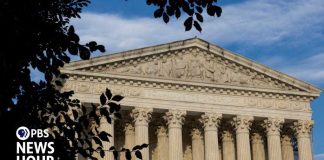
- Federal courts blocked the order nationwide, leading to Supreme Court case Trump v. Barbara heard April 1, 2026.
- Trump called the U.S. the “only country stupid enough” for birthright citizenship in a Fox News interview, tying it to post-Civil War slaves.
- First sitting president attends SCOTUS oral arguments, heightening stakes in immigration showdown.
- At least 33 countries practice unconditional jus soli, debunking Trump’s unique claim.
Trump’s Executive Order Challenges 14th Amendment
Donald Trump signed Executive Order 14160 on January 20, 2025, his first day of the second term. The order denies birthright citizenship to children born in the U.S. after February 19, 2025, if neither parent holds citizenship or lawful permanent resident status. It targets unlawful entrants and temporary visitors, reinterpreting “subject to the jurisdiction thereof” from the 14th Amendment. Trump positioned this as ending a scam exploited by illegal immigrants.
Courts Block Order Amid Lawsuits
ACLU, NAACP Legal Defense Fund, state attorneys general, and immigrant groups filed class-action lawsuits immediately after the order. Federal courts issued nationwide injunctions, ruling the EO violates the 14th Amendment and 127 years of precedent. Cases consolidated into Barbara v. Trump reached the Supreme Court on appeal. Lower courts unanimously rejected the administration’s fringe theory on jurisdiction.
Historical Roots of Birthright Citizenship
The 14th Amendment, ratified in 1868, grants citizenship to all persons born in the U.S. and subject to its jurisdiction. Congress aimed to overturn Dred Scott v. Sandford and secure rights for freed slaves’ children. United States v. Wong Kim Ark in 1898 extended it to children of legal non-citizen residents, even during Chinese Exclusion. Exceptions apply only to diplomats and invading forces. Codified in 1940, jus soli remains bedrock law.
Trump Attends Supreme Court Arguments
On March 31, 2026, Trump announced his plan to attend Supreme Court oral arguments in Fox News. He reiterated birthright citizenship began for slaves post-Civil War, now abused as the “craziest thing.” April 1, 2026, marked the historic hearing in Trump v. Barbara. Trump became the first sitting president to appear in person, signaling intense personal stake. ACLU condemned it as undue pressure.
Arguments focused on executive power versus constitutional text. No ruling emerged by day’s end. Trump’s presence underscored his immigration crackdown priorities. Conservative justices showed potential openness to narrower jurisdiction reading, aligning with administration views on protecting citizenship value.
Impacts and Expert Views
Short-term, a Supreme Court stay could affect 300,000 annual U.S. births to non-citizen parents, sowing family uncertainty. Long-term success demands congressional action or amendment, risking stateless children reminiscent of Dred Scott. Economic gains target “anchor baby” incentives to curb illegal entries, though verification adds costs. Immigrant communities face multigenerational exclusion.
Legal scholars across aisles deem the EO unconstitutional, defying Wong Kim Ark. Trump administration counters the 14th Amendment excluded illegal aliens originally. Common sense supports deterring exploitation; facts confirm at least 33 nations use unconditional jus soli, weakening uniqueness claims. Civil rights groups defend broad rights to avoid subclasses. Political fire energizes bases on both sides.
Sources:
Trump suggests he will attend birthright citizenship arguments at Supreme Court