A Chicago-area businessman built a criminal side hustle out of fake stickups, until one of his staged robberies ended with a real bullet hitting a real store clerk.
Story Snapshot
- Parth Nayi pleaded guilty to conspiracy to commit visa fraud and got two years in federal prison, a year longer than prosecutors asked for.
- Prosecutors say Nayi organized staged armed robberies so people could falsely claim crime-victim status and apply for U visas.
- Participants reportedly paid Nayi between $5,000 and $30,000 each to take part in the fake crimes.
- A clerk in Chicago’s Bucktown neighborhood was shot during one of the staged robberies tied to the scheme.
- Six people total were indicted in 2024 for the scheme, which allegedly spanned Illinois, Louisiana, and Tennessee.
What Prosecutors Say Nayi Actually Did
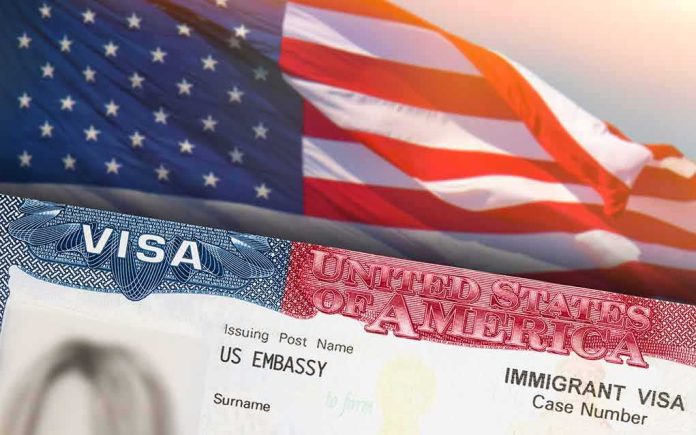
Federal prosecutors in the Northern District of Illinois say Nayi ran a scheme built around a specific legal loophole. U visas let crime victims stay in the country if they cooperate with police, and the law does not require anyone to be arrested or convicted for a victim’s claim to count. Nayi allegedly turned that rule into a business, staging armed robberies so people could claim victim status they never earned.
The Justice Department says Nayi, along with Kewon Young and four members of the Patel family, staged robberies at restaurants, coffee shops, liquor stores, and gas stations across Chicago’s suburbs, plus locations in Rayne, Louisiana, and Belvidere, Tennessee. Prosecutors described the pattern as hundreds of staged armed robberies carried out from 2022 through 2024, a scale that points to organized repetition rather than a single bad decision.
The Price Tag on a Fake Victimhood
Money made the scheme work. Prosecutors say people paid Nayi between $5,000 and $30,000 apiece to participate in the staged robberies, then used their supposed victimhood to pursue a U visa application. A separate federal filing against Nayi for related conduct outlined similar allegations of businesses used as cover for the fake crimes. The payment structure gave the operation a clear financial motive beyond any claimed desire to help struggling immigrants.
Nayi pleaded guilty earlier in 2026 to conspiracy to commit visa fraud. On October 22, 2026, U.S. District Judge Mary M. Rowland sentenced him to two years in federal prison and ordered him to pay a $50,000 fine. The Chicago Tribune reported the sentence ran a full year longer than what prosecutors themselves had recommended, with the judge apparently viewing the damage to the visa system as more serious than the government’s own ask.
A Fake Crime That Turned Real
The scheme’s central risk showed up in Chicago’s Bucktown neighborhood, where a clerk was shot during one of the staged robberies connected to the operation. CWB Chicago reported the shooting happened amid the broader scheme prosecutors describe as a nationwide fraud operation. Staging an armed robbery means putting a real gun, or something that looks like one, into a real store with real people inside. That gap between pretend and actual violence is exactly where someone could get hurt, and did.
Nayi’s defense attorney, George M. Gomez, pushed back on parts of the government’s framing at sentencing. He argued the staged robberies involved no true victims or unwilling participants, that everyone involved chose to take part voluntarily, and that Nayi did not personally prepare or file the fraudulent immigration paperwork himself. He also said his client cooperated with investigators after his arrest, a point Judge Rowland weighed against the broader harm prosecutors described to the integrity of the visa program.
What This Means for the U Visa Program
This case lands inside a much bigger conversation about fraud in immigration benefit programs generally. Federal data on U visas shows a small but real fraud problem baked into the system’s design. U.S. Citizenship and Immigration Services found roughly 198 suspect applications out of 7,360 filed in 2014, and that number grew to about 801 suspect applications out of 12,801 filed by 2018, or roughly 6 percent of filings that year. Those figures describe suspicion flagged by officials, not proven fraud in every case, but they show the vulnerability is longstanding and documented.
Nayi’s case does not prove that U visas are broadly fraudulent, and it should not be read that way. It does show what happens when one person figures out how to exploit a program that depends heavily on cooperation and trust rather than hard proof of a conviction. Five other defendants named in the original 2024 indictment faced their own charges in the same scheme, and prosecutors have said they secured convictions in those cases as well.
𝐑𝐈𝐍𝐆𝐋𝐄𝐀𝐃𝐄𝐑 𝐖𝐇𝐎 𝐒𝐓𝐀𝐆𝐄𝐃 𝐇𝐔𝐍𝐃𝐑𝐄𝐃𝐒 𝐎𝐅 𝐅𝐀𝐊𝐄 𝐑𝐎𝐁𝐁𝐄𝐑𝐈𝐄𝐒 𝐅𝐎𝐑 𝐌𝐈𝐆𝐑𝐀𝐍𝐓 𝐕𝐈𝐒𝐀𝐒 𝐆𝐄𝐓𝐒 𝐉𝐔𝐒𝐓 𝐓𝐖𝐎 𝐘𝐄𝐀𝐑𝐒
𝐏𝐚𝐫𝐭𝐡 𝐍𝐚𝐲𝐢, 29, ran a Chicago-based scheme that staged fake armed robberies at restaurants, convenience… pic.twitter.com/tEvwAQtKJW
— M.A. Rothman (@MichaelARothman) October 26, 2026
The two-year sentence closes one chapter of a scheme prosecutors say stretched across three states and years of staged crimes. The shooting in Bucktown stands as the clearest reminder that fake crimes carry real risk once actual weapons and actual people get involved, no matter what paperwork someone hoped to file afterward.
Sources:
redstate.com, justice.gov, chicagotribune.com, fox32chicago.com, lakemchenryscanner.com, dailywire.com, gao.gov, uscis.gov