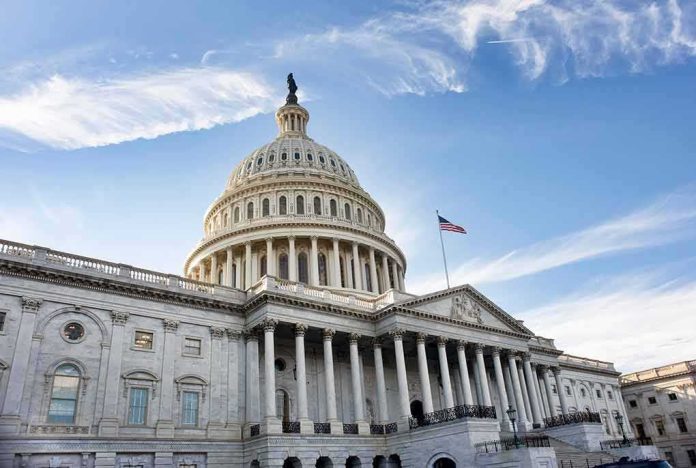
Congress is about to test whether a Cabinet secretary can be impeached for how a war was fought.
Story Snapshot
- The House is set to vote on impeaching Defense Secretary Pete Hegseth over the Iran war.
- Rep. Thomas Massie filed a privileged resolution, forcing action within days.
- Democratic Leader Hakeem Jeffries publicly backs impeachment, calling himself a hard yes.
- The White House argues Article II powers and a ceasefire stopped the War Powers clock.
What the impeachment drive actually alleges
Rep. Thomas Massie’s resolution says Hegseth waged war against Iran without a declaration of war, no specific law authorizing it, no attack on the United States, and no imminent threat. The filing says he kept hostilities going after the War Powers Resolution’s sixty-day deadline and any thirty-day withdrawal window. It also claims both chambers directed removal of forces and that he refused to comply. Massie filed it as privileged, which ensures the House must address it on the floor.
These charges turn a long-running constitutional fight into a direct accountability test. Congress has argued since the Vietnam era that presidents should seek approval before sustained combat, which is why the War Powers Resolution exists. The law tries to force a choice: get authorization or wind down within set time limits. The catch is enforcement. Past fights often stalled in politics rather than courts. This time, the House wants to use impeachment power to decide who crossed the line.
Why the House is moving now
Procedural timing is the lever. By designating the articles as privileged, Massie limited leadership’s ability to bury them in committee. That move compels floor action within two legislative days. Earlier this fall, leaders slowed things by recessing, but the mechanism remained live and ready to trigger a vote. Media reports describe the push as unlikely to remove Hegseth in the Senate, but they still frame it as a defining House test of war powers limits.
Support crossed party lines in a targeted way. House Democratic Leader Hakeem Jeffries said he is a hard yes on impeachment, accusing Hegseth of abusing power and driving a reckless war. That support raises the political stakes for Republicans who campaign on constitutionalism and limited government. If you say process matters, critics will ask whether you enforce process when your party runs the executive branch. The whip count will tell whether principle or party prevails this week.
The defense: Article II and a stopped clock
Hegseth and the administration say the Constitution gave President Trump the authority to act. They argue Article II powers covered the strikes and that the War Powers Resolution’s sixty-day clock did not force new approval because a ceasefire paused or ended the hostilities. Hegseth said the president had all needed authority. A senior official said hostilities that began February 28 had terminated, supporting the clock argument. President Trump also framed the action as a military operation, not a formal war.
That defense tracks a familiar executive branch stance. Presidents from both parties have leaned on inherent powers for limited wars, and have often questioned parts of the War Powers Resolution. The legal fight here is narrow but sharp: did the facts on the ground trigger and exhaust the statute’s deadlines, and did operations after that point require a vote? If the answer is yes, the House case gains force. If a real ceasefire stopped the clock, the defense gains ground.
What stands on firm ground, and what does not
Three points rest on solid footing. First, the House faces a real vote soon because the filing is privileged. Second, the articles accuse Hegseth of violating the War Powers Resolution’s time limits and ignoring a congressional direction to withdraw. Third, Jeffries backs impeachment, which signals a united Democratic front and pressures moderates on the right. These facts come from official and named sources and carry enough weight to drive the chamber’s calendar.
Top Democrat Hakeem Jeffries is a "hard yes" on impeaching Defense Secretary Pete Hegseth, with a House vote on Rep. Thomas Massie's resolution expected this week.https://t.co/P4w2z0A3YS#Hegseth #Impeachment #HakeemJeffries #ThomasMassie #Congress pic.twitter.com/abAQDZ9eQM
— ItsJustContent (@ItsJustContentx) November 9, 2026
Open questions remain. The public record does not include the executive’s full legal memos, the exact operational orders, or a complete timeline that shows when the sixty-day period started and paused. The status of a specific withdrawal directive, identified as House Concurrent Resolution 86, is not laid out in detail in the public documents. Those gaps do not erase the charges, but they shape how swing members judge proof and how the public reads the fight.
How conservatives might weigh the choice
Conservative instincts lean toward clear rules, lawful force, and real oversight. The Constitution puts Congress in the war decision loop for a reason. At the same time, conservatives also value a strong commander in chief who can act fast to protect American lives. The question is whether this operation stayed within those bounds. If hostilities ran past the War Powers deadline without a vote, accountability fits conservative rule-of-law values. If a genuine ceasefire reset the clock, restraint against overreach also fits.
What to watch when the gavel drops
Watch the floor debate for a specific timeline: first strikes, ceasefire dates, and any restart. Listen for the legal hook the administration claims beyond Article II, if any. Look for whether House leaders allow amendments or move straight to a clean vote. Finally, watch whether Republicans unify around process or fracture along presidential loyalty lines. Regardless of the outcome, this vote will set the modern bar for when Congress uses impeachment to police war powers.
Sources:
axios.com, massie.house.gov, inquirer.com, abcnews4.com, reuters.com, schiff.senate.gov, c-span.org